
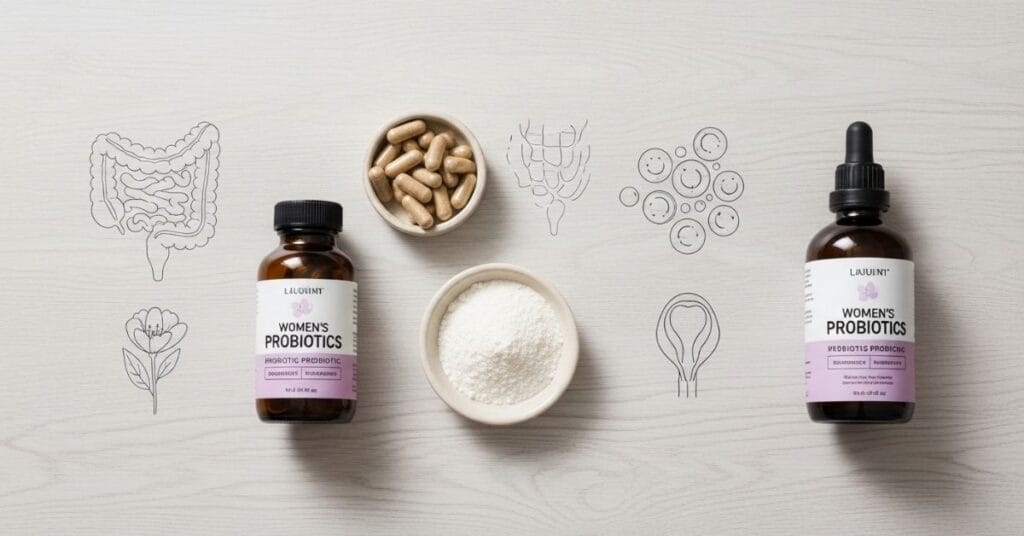
Women’s probiotic needs go beyond digestion. Hormonal fluctuations, menstrual cycles, pregnancy, menopause, antibiotic use, and stress all influence the gut, vaginal, and urinary microbiomes.
In this 2026 evidence-aware guide, we compare the best probiotics for women — with structured analysis of strains, CFU counts, formulation quality, and real-world positioning — focusing primarily on leading formulas from Garden of Life.
Why Women Need Targeted Probiotics
The female microbiome is dynamic and hormone-sensitive.
Key factors influencing women’s microbial balance:
- Estrogen fluctuations affecting vaginal flora
- Antibiotic use disrupting Lactobacillus dominance
- Pregnancy-related microbiome shifts
- Perimenopause and postmenopause changes
- Gut-vaginal microbial axis interaction
A healthy vaginal microbiome is typically dominated by Lactobacillus species. These bacteria help maintain an acidic pH and inhibit colonization by unwanted organisms.
Because the gut and vaginal ecosystems are interconnected, oral probiotics may indirectly influence urogenital balance through immune modulation and microbial signaling pathways.
What to Look for in the Best Probiotic for Women
Not all probiotics are equal. When evaluating a women’s formula, consider the following:
Clinically Studied Lactobacillus Strains
Strain specificity matters more than brand marketing.
Look for strains commonly studied in women’s health contexts, such as:
- Lactobacillus rhamnosus
- Lactobacillus reuteri
- Lactobacillus acidophilus
Effects are strain-specific — not all L. rhamnosus strains behave identically.
CFU Count & Survivability
CFU (colony-forming units) indicates the number of viable microorganisms.
- 10–20 billion CFU is common for daily maintenance
- 30–50 billion CFU is considered high-potency
However, higher CFU does not automatically equal better results. Survival through gastric acid and strain compatibility matter more than sheer quantity.
Shelf Stability & Quality Control
A probiotic must remain viable until expiration.
Important quality markers:
- Shelf-stable delivery (no refrigeration required)
- Third-party testing
- Transparent labeling
- Allergen-free formulation
Age-Specific Formulation
Women’s needs differ by life stage:
- Reproductive years
- Pregnancy
- Perimenopause
- 50+ postmenopause
A formula designed for a 25-year-old may not be ideal for a 60-year-old.
Best Garden of Life Probiotics for Women in 2026
Below are the top-positioned formulas from Garden of Life for different women’s health goals.
Best Overall: Garden of Life Dr. Formulated Once Daily Women’s Probiotic
30 Billion CFU | Multi-strain | Shelf-Stable
Why it stands out:
- Balanced daily maintenance formula
- Includes Lactobacillus strains associated with vaginal health
- Designed for gut + vaginal support
- Convenient one-capsule daily dosing
Best suited for women seeking structured, everyday microbiome balance without extremely high potency.
Best High-Potency Option: Garden of Life RAW Probiotics Women
50 Billion CFU | Raw-style multi-strain blend
Positioning:
- Higher CFU count
- Broad microbial diversity
- Minimal synthetic additives
Ideal for women specifically seeking high-potency support, particularly after antibiotic exposure or periods of digestive imbalance.
Higher potency does not guarantee superior outcomes, but may improve survivability through gastric transit.
Best for Vaginal & Urinary Balance: Garden of Life Dr. Formulated Probiotics Urinary Tract+
50 Billion CFU | 16 Strains | Cranberry + Vitamin D3
Designed for:
- Urinary microbiome balance
- Vaginal flora support
- Multi-mechanism approach (probiotic + cranberry extract)
Important distinction:
This supplement is not a treatment for active urinary tract infections. It is positioned as a preventive microbiome-support strategy.
No published human trials evaluate the finished 16-strain formula as a unified intervention — a common limitation across the supplement industry.
Best for Women 50+: Garden of Life Dr. Formulated Probiotics Once Daily Women 50 & Wiser
Postmenopausal women often experience:
- Reduced estrogen
- Changes in vaginal flora
- Altered immune modulation
This formula is tailored toward mature microbiome support with moderate potency and digestive balance emphasis.
Best for long-term daily support rather than acute intervention.
Best Prenatal Option: Garden of Life Dr. Formulated Probiotics Prenatal
Pregnancy introduces significant microbiome shifts.
This prenatal probiotic is positioned for:
- Maternal gut health
- Vaginal balance support
- Gentle daily dosing
Pregnant individuals should always consult a physician before starting any supplement.
How Garden of Life Compares to Other Probiotic Brands
Other brands frequently mentioned in women’s probiotic discussions include:
- Culturelle
- Renew Life
Compared to many competitors, Garden of Life emphasizes:
- Multi-strain diversity
- Shelf-stable delivery
- High-CFU options
- Targeted life-stage formulas
Some competing brands may offer more strain-specific clinical backing for individual strains, while Garden often focuses on broader microbial diversity.
Choice ultimately depends on preference for diversity versus precision strain targeting.
Gut vs Vaginal Microbiome: Why It Matters
The gut microbiome:
- Supports digestion
- Influences immunity
- Affects systemic inflammation
The vaginal microbiome:
- Maintains acidic pH
- Protects against overgrowth of unwanted organisms
The gut-vaginal axis suggests oral probiotics may indirectly support vaginal balance through immune and microbial signaling pathways.
However:
- Colonization is not guaranteed
- Effects vary by individual
- Microbiome response is highly personalized
Are Probiotics Safe for Long-Term Use?
Probiotics are generally well tolerated in healthy individuals.
Possible mild side effects:
- Temporary bloating
- Gas
- Digestive adjustment
Caution is advised for:
- Immunocompromised individuals
- Active infections
- Severe or persistent urinary symptoms
Probiotics are adjunctive support — not a replacement for medical treatment.
Final Verdict: Is Garden of Life the Best Choice in 2026?
For women prioritizing:
- Multi-strain diversity
- Shelf-stable convenience
- Structured life-stage formulas
- Preventive microbiome support
Garden of Life remains one of the most comprehensive probiotic lines available in 2026.
It is not FDA-approved (standard for supplements).
It lacks full-formula human clinical trials (common industry limitation).
Its ingredient profiles are biologically plausible but not definitive as unified interventions.
Best suited for:
- Women seeking daily microbiome stabilization
- Those comfortable with ingredient-level evidence
- Individuals preferring multi-mechanism formulations
Not ideal for:
- Treating diagnosed infections
- Replacing physician-guided care
- Expecting immediate symptom reversal
When expectations are aligned with preventive support rather than medical treatment, Garden of Life represents a structured premium option in the women’s probiotic category.
Related Women’s Probiotic Guides
For deeper clinical breakdowns, strain-specific analysis, and individual formula comparisons, explore the guides below:
- Garden of Life Urinary Probiotic Review: Dr. Formulated Probiotics Urinary Tract+ Ingredients, Side Effects & Is It Worth It?
- Garden of Life Urinary Tract+ Full Review
- Garden RAW Women High-Potency Breakdown
- Once Daily Women’s Probiotic Review
- Probiotics for Women 50+: What Changes After Menopause?
- Do Probiotics Help Prevent Recurrent UTIs?
Reviewed by Laura Collins
Editor & Lead Content Researcher at Wellness Balance Pro
Laura Collins reviews wellness and metabolic health content using a research-based approach focused on clarity, accuracy, and real-world relevance.