

By Laura Collins | Updated July 2026 | 11 min read
Affiliate disclosure: This page contains affiliate links. If you purchase through our links we may earn a small commission at no extra cost to you.
Medical disclaimer: This content is for informational purposes only. Always consult your doctor before starting any supplement.
Our Editorial Process: Every ingredient below is cross-referenced against GlucoTonic’s own published research citations and independent clinical literature. Where evidence is strong, we say so specifically. Where it’s thinner, we say that too — no vague “plant-based extracts” language without naming what’s actually inside.
Understanding exactly what’s in a supplement — not just a vague description of it — is one of the smartest steps before buying. This guide breaks down every named ingredient in GlucoTonic, what it actually does, and what the research shows.
For our complete review and pricing breakdown: → GlucoTonic Review: Does It Actually Work?
Why Ingredient Specificity Matters
Blood sugar regulation involves multiple systems working together — insulin sensitivity, glucose absorption, cellular energy production, and inflammation control. A formula that names its exact ingredients, at least by type, lets you verify the evidence yourself rather than trusting vague marketing language like “proprietary herbal blend.”
GlucoTonic’s official materials disclose specific named ingredients, backed by a reference list of 21 published studies. Here’s what each one actually does.
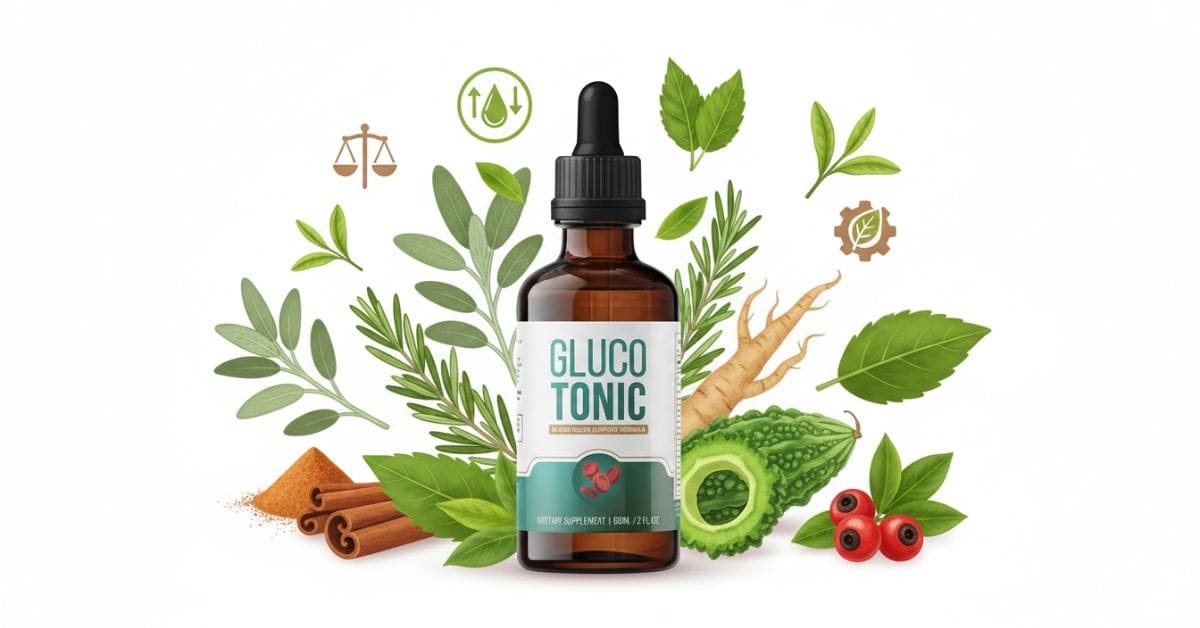
The Key Ingredients
1. Chromium — The Most Heavily Referenced Ingredient
Chromium appears across five separate references on GlucoTonic’s official list — more than any other single ingredient in the formula.
What it does: An essential trace mineral that enhances insulin receptor sensitivity, helping your body use the insulin it already produces more effectively. Chromium deficiency is more common than most people realize, particularly in adults eating a processed food diet, and correcting that deficiency can meaningfully improve glucose handling.
What the research shows: Cited studies include a meta-analysis of randomized trials showing improved glucose and lipid profiles in Type 2 diabetes patients, plus specific research on chromium’s benefit in overweight children and in Indian populations with Type 2 diabetes.
Evidence strength: Strong
2. Gymnema Sylvestre — “The Sugar Destroyer”
Used in Ayurvedic medicine for centuries, Gymnema is one of the most consistently evidenced natural compounds for blood sugar support.
What it does: Physically blunts sweet taste receptors on the tongue — directly reducing sugar cravings — while also reducing intestinal glucose absorption.
What the research shows: A 2021 systematic review confirmed meaningful reductions in fasting blood glucose with Gymnema supplementation across multiple trials.
Evidence strength: Strong
3. Ginseng
Three separate references on GlucoTonic’s official list cover ginseng — spanning blood glucose control in diabetic patients, cognitive performance during sustained mental activity, and cardiovascular markers in people with hypertension.
What it does: Supports blood sugar regulation while also providing genuine energy and cognitive benefits — relevant to GlucoTonic’s combined blood-sugar-and-energy positioning.
Evidence strength: Moderate to Strong
4. L-Carnitine
Three references cover L-carnitine, including a systematic review and meta-analysis of randomized controlled trials specifically on glycemic control.
What it does: Plays a role in how your cells use fat for energy. The cited research connects it to measurable improvements in insulin sensitivity, particularly relevant for the energy component of GlucoTonic’s formula.
Evidence strength: Moderate to Strong
5. African Mango (Irvingia gabonensis)
What it does: Targets leptin sensitivity — the hormone that signals fullness — helping reduce the overeating patterns that contribute to blood sugar instability and weight gain.
What the research shows: A 2009 randomized double-blind placebo-controlled trial found significant improvements in body weight, waist circumference, and fasting glucose over 10 weeks. GlucoTonic’s own reference list cites a related study on Irvingia gabonensis and body weight/lipid outcomes.
Evidence strength: Moderate to Strong
6. Green Tea
What it does: Green tea’s catechins — particularly EGCG — support insulin sensitivity and provide broader metabolic benefits through antioxidant activity.
What the research shows: The official reference list cites a controlled intervention study examining green tea’s effects on cholesterol, glucose, and hormone levels in postmenopausal women over two months.
Evidence strength: Moderate to Strong
7. Capsaicin (from Cayenne/Capsicum)
What it does: The active compound in chili peppers, with documented thermogenic properties supporting metabolic rate.
What the research shows: The official reference list cites pharmacokinetic research specifically on capsaicin’s effect in decreasing plasma glucose levels.
Evidence strength: Moderate
8. Eleuthero (Siberian Ginseng)
What it does: An adaptogen that reduces cortisol response to stress. Elevated cortisol is a documented driver of both blood sugar instability and abdominal fat storage.
What the research shows: Cited research examined Eleuthero’s effect on endurance capacity and metabolism over an 8-week supplementation period.
Evidence strength: Moderate
9. Maca Root
What it does: An adaptogen traditionally used for energy and hormonal balance.
What the research shows: The official list cites a randomized, double-blind, placebo-controlled safety and efficacy study — solid safety data, though blood-sugar-specific evidence is thinner than the ingredients above.
Evidence strength: Limited to Moderate
How the Formula Works Together
Rather than targeting blood sugar through a single mechanism, GlucoTonic’s ingredients work across several pathways simultaneously:
Insulin sensitivity: Chromium and L-Carnitine improve how effectively your cells respond to insulin.
Glucose absorption: Gymnema Sylvestre reduces how much sugar your intestines absorb from food, while also blunting cravings at the taste-receptor level.
Energy and stress: Ginseng, Eleuthero, and Maca address the fatigue and cortisol-driven blood sugar instability that pure glucose-focused formulas often ignore.
Metabolic and antioxidant support: Green Tea and Capsaicin provide additional metabolic rate support, backed by real thermogenic and antioxidant research.
This multi-pathway approach is more comprehensive than single-ingredient formulas, though it also means no single mechanism is doing all the work — results depend on the combined, cumulative effect building over several weeks.
Are GlucoTonic’s Ingredients Safe?
The ingredients in GlucoTonic are generally well-tolerated by most healthy adults when used as directed.
Who should be careful:
- Anyone on blood sugar medication — Chromium and Gymnema both actively lower blood sugar, and combined with medication, this can cause blood sugar to drop too low
- Anyone sensitive to caffeine — Green Tea contains natural caffeine
- Pregnant or nursing women
- Anyone under 18
For the complete safety breakdown: → GlucoTonic Side Effects: Is It Safe?
Ingredient Transparency and Legitimacy
Ingredient transparency is one of the strongest signals separating a legitimate supplement from a hype product with hidden proprietary blends. GlucoTonic names each ingredient specifically rather than hiding behind vague “herbal complex” language, and its 21-reference scientific citation list — with roughly 81% directly testing named ingredients — is more substantive than most products we’ve reviewed in this category.
If you’re still evaluating overall trustworthiness, including the copycat websites we found circulating this product: → Is GlucoTonic a Scam? Real Reviews & What to Verify
Ingredients vs. Real-World Results
Strong ingredient evidence doesn’t automatically guarantee individual results. What actually determines outcomes:
Consistency of use — most sources indicate 4 to 8 weeks minimum before meaningful results appear.
Diet and lifestyle — no supplement overcomes a significantly imbalanced diet; GlucoTonic works best alongside reasonable eating habits.
Individual metabolism — chromium and zinc deficiencies, insulin resistance severity, and other individual factors all affect how strongly any formula performs.
For real-world expectations, pros, cons, and pricing: → GlucoTonic Review: Does It Actually Work?
Final Thoughts on GlucoTonic Ingredients
GlucoTonic’s formula is built on a genuinely above-average evidence base for this supplement category. Chromium — the most heavily cited ingredient — has strong, well-documented research support, and it’s joined by Gymnema Sylvestre and Ginseng, both with real clinical backing. The combination of blood-sugar-focused ingredients with genuine energy and stress-support compounds (Ginseng, L-Carnitine, Eleuthero) reflects a reasonably comprehensive approach for adults managing both blood sugar and fatigue.
🩸 GlucoTonic — Blood Sugar & Energy Support Formula
9 named ingredients, backed by 21 scientific references. 90-day money-back guarantee on every package.
Check Current Pricing →Frequently Asked Questions
What are the main ingredients in GlucoTonic? Chromium, Gymnema Sylvestre, Ginseng, L-Carnitine, African Mango, Green Tea, Capsaicin, Eleuthero, and Maca Root — each targeting a different aspect of blood sugar, energy, or metabolic support.
Which GlucoTonic ingredient has the strongest evidence? Chromium, which appears in five separate references on the official list and has strong, well-documented clinical evidence for improving insulin sensitivity and glycemic control.
Does GlucoTonic contain caffeine? Yes, in modest amounts from Green Tea. Those very sensitive to caffeine should take this into account, particularly regarding timing.
Is GlucoTonic safe to take with diabetes medication? Not without your doctor’s involvement. Chromium and Gymnema both actively lower blood sugar, and combined with medication, this can cause blood sugar to drop too low.
How is GlucoTonic different from other blood sugar supplements? Its combination of well-evidenced glucose-focused ingredients (Chromium, Gymnema) with genuine energy and adaptogenic support (Ginseng, L-Carnitine, Eleuthero) addresses both blood sugar and fatigue simultaneously — a dual focus not every competing formula offers.
Read More in the GlucoTonic Cluster
→ GlucoTonic Review: Does It Actually Work for Blood Sugar Control? → Is GlucoTonic a Scam? Real Reviews & What to Verify → GlucoTonic vs Other Blood Sugar Supplements
References
¹ “Effect of chromium on glucose and lipid profiles in patients with type 2 diabetes: a meta-analysis review of randomized trials.” Cited on official GlucoTonic reference list.
² Devangan S, et al. “The effect of Gymnema sylvestre supplementation on glycemic control.” Phytotherapy Research, 2021. PMID: 34467577
³ “Ginseng therapy in non-insulin-dependent diabetic patients.” Cited on official GlucoTonic reference list.
⁴ Ngondi JL, et al. “IGOB131, a novel seed extract of Irvingia gabonensis, significantly reduces body weight.” Lipids in Health and Disease, 2009. PMID: 19865526