

By Laura Collins | Updated July 2026 | 12 min read
Affiliate disclosure: This page contains affiliate links. If you purchase through our links we may earn a small commission at no extra cost to you.
Medical disclaimer: This content is for informational purposes only. Always consult your doctor before starting any supplement.
Our Editorial Process: Every ingredient below is cross-referenced against published research. Where evidence is strong and human-trial backed, we say so. Where it’s mostly traditional use, animal models, or in vitro research, we say that too — clearly and without spin.
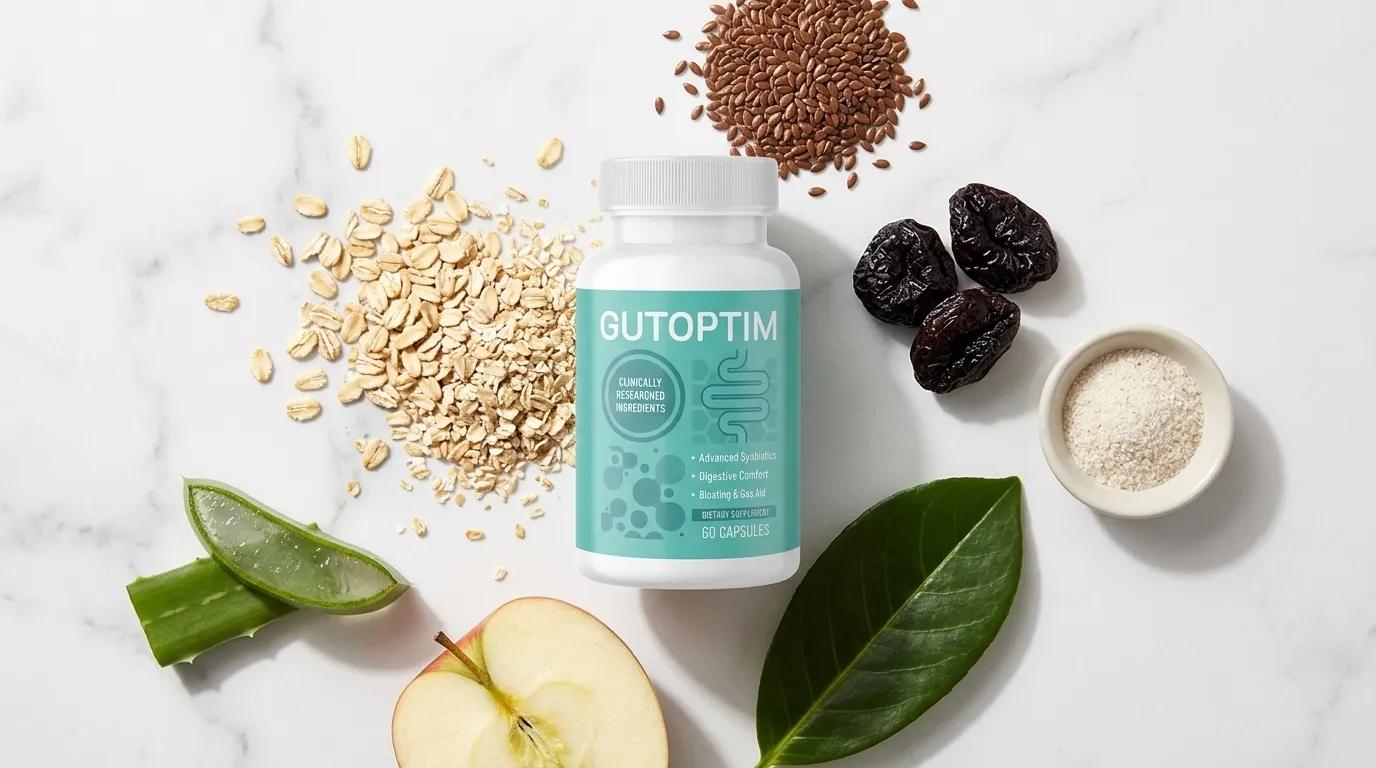
GutOptim contains 10 disclosed ingredients organized around a synbiotic approach — probiotics, prebiotic fibers, and botanical gut-support compounds working together rather than a single isolated ingredient.
Here’s what each one does and what the research actually shows.
👉 Visit the Official GutOptim Website
The 10 Ingredients
1. Lactobacillus acidophilus — The Probiotic Foundation
What it is: One of the most researched probiotic strains available — a bacterium naturally found in the human gut and in fermented foods like yogurt and kefir.
What it does in GutOptim: Repopulates the gut with beneficial bacteria, competes with gas-producing harmful bacteria, and produces lactic acid that creates an environment hostile to pathogens.
What the research shows: Multiple clinical trials have demonstrated L. acidophilus supplementation improves IBS symptoms including bloating, cramping, and irregular bowel movements. Given that approximately 70% of the immune system is gut-associated, supporting healthy bacterial populations has benefits that extend beyond digestion alone.
Evidence strength: Strong — one of the most well-established probiotic strains in clinical literature.
2. Konjac Glucomannan — The Primary Prebiotic
What it is: A highly soluble dietary fiber derived from the konjac root, used in traditional Asian medicine and now one of the most clinically studied fibers for digestive health.
What it does in GutOptim: Feeds beneficial bacteria — particularly Bifidobacterium and Lactobacillus strains — while forming a gel in the digestive tract that slows digestion and improves stool consistency.
What the research shows:
A 2023 review in Foods confirmed konjac glucomannan’s role as an emerging specialty medical food for metabolic and digestive health. A comprehensive review documented its prebiotic effects and health benefits across multiple physiological systems.
A 2025 study specifically examined how konjac glucomannan interacts with gut microbiota — finding it’s degraded by gut bacteria into beneficial small-molecule nutrients that support gut barrier function.
Evidence strength: Strong — one of the best-evidenced prebiotic fibers available, addressing a key weakness of probiotic-only supplements (bacteria without food to survive on).
3. Oat Bran — Beta-Glucan Fiber
What it is: A rich source of beta-glucan, a soluble fiber with substantial research support for gut and metabolic health.
What it does in GutOptim: Feeds beneficial bacteria (particularly Bifidobacterium), reduces gut transit time, and works alongside glucomannan to provide broader prebiotic fiber diversity.
What the research shows: Beta-glucan from oat bran has well-documented cholesterol-lowering and blood sugar-stabilizing effects, both of which have established connections to gut microbiome health. Different fiber types feed different bacterial strains — so combining oat bran with glucomannan supports a more diverse microbiome than either alone.
Evidence strength: Strong — beta-glucan is among the most consistently evidenced fiber compounds in nutritional research.
4. Aloe Vera
What it is: A plant used for digestive health across multiple traditional medicine systems for thousands of years, now increasingly validated by modern research.
What it does in GutOptim: Soothes and supports the mucosal lining of the gastrointestinal tract through its polysaccharide content, with mild laxative and anti-inflammatory properties.
What the research shows: Multiple studies have documented aloe vera’s ability to reduce IBS symptoms and support gut lining integrity — particularly relevant for people whose digestive discomfort stems from gut lining irritation (common in food sensitivities and leaky gut presentations).
Evidence strength: Moderate to Strong — solid traditional use backed by growing modern research.
5. Black Walnut — The Honest Limitation
What it is: Black walnut hull, traditionally used for its effects on unwanted gut organisms.
What it does in GutOptim: Contains juglone and tannins believed to have antimicrobial properties — traditionally used to reduce populations of harmful bacteria and fungi (particularly Candida overgrowth), creating more favorable conditions for beneficial bacteria.
What the research shows — the honest picture: This is where we need to be transparent. Most available research on black walnut’s antimicrobial properties comes from traditional use, in vitro laboratory studies, or limited animal models — not large-scale human randomized controlled trials specific to gut health. The mechanistic rationale (juglone’s documented antimicrobial activity) is reasonable, but direct human clinical evidence for gut microbiome effects specifically remains limited.
Evidence strength: Limited — traditional use and mechanistic plausibility; human clinical trials for this specific application are lacking.
6. Bentonite Clay — The Honest Limitation
What it is: A natural clay with strong ionic binding properties, one of the more unusual ingredients in gut health formulas.
What it does in GutOptim: Its negative ionic charge is believed to attract and bind positively charged toxins, heavy metals, and harmful bacteria in the digestive tract, helping remove them through normal elimination.
What the research shows — the honest picture: Similar to black walnut, most research on bentonite clay’s toxin-binding effects in the gut comes from animal models and mechanistic/laboratory studies rather than human clinical trials. The ionic binding mechanism is well-documented chemically, but rigorous human trials specifically measuring bloating or digestive outcomes from bentonite clay supplementation are limited in the published literature.
Evidence strength: Limited — plausible mechanism, animal model support; human clinical evidence for digestive benefits specifically is thin.
7. Flaxseed
What it is: A seed providing both prebiotic fiber (mucilage) and omega-3 fatty acids (ALA).
What it does in GutOptim: The mucilage fiber soothes the digestive lining and supports smooth stool transit, while the omega-3 content supports reduced gut inflammation. It also feeds beneficial Bifidobacterium strains in the large intestine.
What the research shows: Flaxseed has well-documented effects on increasing stool frequency and improving constipation without causing urgency — a meaningfully different profile from harsher stimulant laxatives.
Evidence strength: Strong — dual-mechanism ingredient with solid evidence for both fiber and anti-inflammatory benefits.
8. Apple Pectin
What it is: A soluble fiber found in apples, functioning as both a prebiotic and gut-lining support compound.
What it does in GutOptim: Selectively feeds Lactobacillus and Bifidobacterium bacteria, forms a gel that slows carbohydrate absorption, and supports production of short-chain fatty acids (SCFAs) — the compounds that fuel intestinal lining cells and reduce inflammation.
What the research shows: Apple pectin has documented effects on reducing diarrhea by absorbing excess digestive water, and its role in SCFA production is well-established in the fiber fermentation literature.
Evidence strength: Moderate to Strong — solid mechanistic and fermentation research.
9. Prune Powder
What it is: Dried plums, one of the most well-documented natural remedies for digestive regularity.
What it does in GutOptim: Rich in sorbitol and insoluble fiber that increase gut motility, plus chlorogenic acids with prebiotic properties. Also supports bile acid production, improving fat digestion.
What the research shows: Clinical trials have found prunes more effective than psyllium husk for relieving constipation in adults — a notably strong head-to-head result for a “simple” food-based ingredient.
Evidence strength: Strong — genuine clinical trial evidence, not just traditional use.
10. Psyllium Husk
What it is: One of the most clinically studied dietary fibers available, with an unusually strong evidence base.
What it does in GutOptim: Acts as both soluble and insoluble fiber — softening stool while adding bulk — and normalizes bowel function in both directions (helping constipation AND diarrhea).
What the research shows: Psyllium husk has FDA-approved cholesterol-lowering claims when used regularly, and its dual-direction effect on bowel regularity is well-documented across numerous clinical trials — making it valuable in a formula addressing gut imbalance broadly, since dysfunction can present as either constipation or diarrhea.
Evidence strength: Strong — among the most rigorously studied fibers in clinical nutrition.
The Honest Summary
Of the 10 ingredients in GutOptim, 8 have strong to moderate human clinical evidence — Lactobacillus acidophilus, Konjac Glucomannan, Oat Bran, Aloe Vera, Flaxseed, Apple Pectin, Prune Powder, and Psyllium Husk.
2 ingredients — Black Walnut and Bentonite Clay — rely primarily on traditional use, mechanistic plausibility, and animal or in vitro research rather than robust human clinical trials specific to gut health outcomes. This doesn’t mean they don’t work — the mechanisms are reasonable — but it’s a meaningfully different evidence tier than the other 8 ingredients, and we think you deserve to know that distinction clearly.
This kind of formula — mostly well-evidenced ingredients with a couple of traditionally-used compounds rounding out the profile — is fairly typical in this supplement category. What matters is knowing which is which.
How the Ingredients Work Together
GutOptim’s formula follows a three-layer strategy:
Layer 1 — Repopulate: L. acidophilus introduces beneficial bacteria directly.
Layer 2 — Feed: Konjac glucomannan, oat bran, flaxseed, and apple pectin provide diverse prebiotic fiber so the introduced bacteria — and your existing beneficial strains — have fuel to survive and multiply.
Layer 3 — Restore: Aloe vera supports the gut lining directly. Black walnut and bentonite clay (with the evidence caveats noted above) are intended to reduce competing harmful organisms and bind irritants. Prune and psyllium support motility so the whole system moves properly.
This layered approach is more comprehensive than a basic single-strain probiotic — which introduces bacteria without addressing whether they’ll survive or what environment they’re entering.
👉 Check Current Pricing — Official GutOptim Website
Frequently Asked Questions
Does GutOptim contain dairy or common allergens? The formula is plant and mineral-based aside from the probiotic strain itself. Always check the official label for the most current allergen information, particularly if you have specific food sensitivities.
Is Konjac Glucomannan safe? Yes, generally — it’s one of the most studied prebiotic fibers available. It’s important to take it with adequate water, as its high water-absorbing capacity can cause discomfort if hydration is insufficient.
Why does GutOptim include Bentonite Clay if the human evidence is limited? The mechanistic rationale — ionic binding of toxins and harmful bacteria — is well-established chemically, and it has a long history of traditional use for digestive support. The limitation is specifically in large-scale human clinical trials measuring digestive outcomes, not in the underlying chemistry.
Is Black Walnut safe alongside probiotics? Generally considered safe for most adults at supplemental doses. If you have tree nut allergies, consult your doctor before use, as black walnut is derived from a nut-bearing tree.
What ingredient in GutOptim has the strongest evidence? Psyllium husk and konjac glucomannan both have the most robust human clinical trial evidence in the formula — both are extensively studied fibers with FDA-recognized or clinically validated effects.
👉 Order GutOptim from the Official Website
Read More in the GutOptim Cluster
→ GutOptim Review (2026): Full Honest Assessment
→ GutOptim Scam or Legit? Real Reviews & Red Flags
→ GutOptim Side Effects: Is It Safe?
→ Where to Buy GutOptim (2026)
References
¹ Fang Y, et al. “Konjac Glucomannan: An Emerging Specialty Medical Food to Aid in the Treatment of Type 2 Diabetes Mellitus.” Foods, 2023. PMID: 36673456
² Behera SS, Ray RC. “Nutritional and potential health benefits of konjac glucomannan.” International Journal of Biological Macromolecules, 2016. PMID: 27481345
³ “Interaction Between Konjac Glucomannan and Gut Microbiota and Its Impact on Health.” Biology, 2025. PMC12383575