

This content is for informational purposes only and is not medical advice. Always talk to your doctor about the best dietary approach for your specific situation.
Can Food Really Make a Difference for Blood Sugar?
Short answer: yes — more than most people realize.
No single food works like a magic pill. But consistently eating the right foods — and avoiding the wrong ones — can meaningfully reduce blood sugar spikes, improve how your body responds to insulin, and over time, lower your A1C.
The key is understanding why certain foods help. Once you get that, the choices become obvious.
Here’s the simple version: your body converts carbohydrates into glucose (sugar) and releases it into your bloodstream. Foods that slow down that process — through fiber, protein, or healthy fats — keep your blood sugar rising slowly and steadily instead of spiking fast and crashing hard.
Not sure what your blood sugar numbers mean right now? → Blood Sugar Levels Chart: Normal, High & Diabetes Ranges
The Golden Rule Before the Food List
Before we get into specific foods, there’s one principle that matters more than any individual ingredient:
It’s not just what you eat — it’s what you eat it with.
Eating carbs alone causes a fast glucose spike. Eating the same carbs alongside protein, fiber, or healthy fat slows everything down dramatically.
A bowl of white rice alone: fast spike. The same white rice with salmon and broccoli: much slower, gentler rise.
This is why the order and combination of foods matters as much as the foods themselves. Keep this in mind as you read the list below — these foods work best when they’re part of a balanced meal, not eaten alone.
12 Foods That Naturally Help Lower Blood Sugar
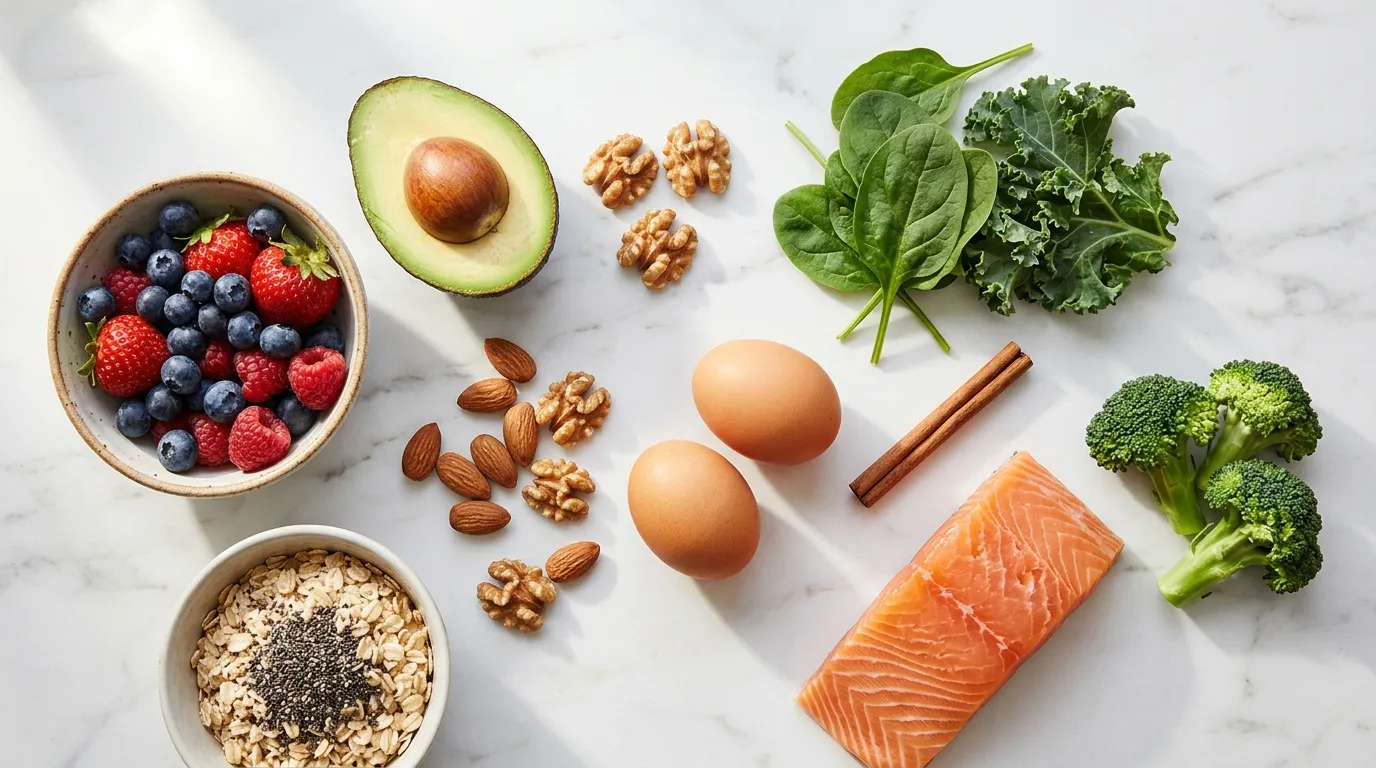
1. Leafy Green Vegetables
Best choices: Spinach, kale, collard greens, Swiss chard, arugula
Leafy greens are one of the best things you can eat for blood sugar — and here’s why they work so well: they’re almost entirely fiber and water, with very little carbohydrate. That means they add almost zero glucose to your bloodstream while filling up your stomach and slowing the digestion of everything else you eat with them.
They’re also rich in magnesium — a mineral that plays a direct role in how insulin works in your body. Many adults with blood sugar issues are low in magnesium without knowing it.
Simple way to eat more: Add a handful of spinach to scrambled eggs in the morning. It wilts down to almost nothing but adds real nutritional value.
2. Berries
Best choices: Blueberries, strawberries, raspberries, blackberries
Fruit gets a bad reputation in the blood sugar world — but berries are the exception. They’re naturally sweet, but they have much less sugar than most other fruits and a lot more fiber. That fiber slows down how quickly the natural sugars in berries hit your bloodstream.
Blueberries in particular have been shown in studies to improve insulin sensitivity — meaning your body gets better at processing glucose over time with regular consumption.
Simple way to eat more: Add a small handful of berries to Greek yogurt or oatmeal in the morning. Pair them with protein (the yogurt) to slow the glucose impact even further.
3. Nuts and Seeds
Best choices: Almonds, walnuts, chia seeds, flaxseeds, pumpkin seeds
Nuts and seeds are one of the best blood sugar snacks available. They’re high in healthy fats, protein, and fiber — all three of which slow digestion and prevent glucose from rushing into your bloodstream quickly.
A handful of almonds before a meal has been shown to reduce the post-meal glucose spike from that meal. Chia seeds are particularly powerful — they absorb water and form a gel in your stomach that dramatically slows digestion.
Simple way to eat more: Keep a small bag of mixed nuts as your default snack. Replace crackers, chips, or granola bars with a handful of almonds or walnuts — same satisfaction, dramatically different effect on blood sugar.
4. Fatty Fish
Best choices: Salmon, mackerel, sardines, tuna, trout
Fatty fish doesn’t directly lower blood sugar — but it’s one of the best things you can build a meal around if you want stable glucose levels. Fish is pure protein with zero carbohydrates, which means it adds no glucose to your bloodstream while keeping you full and satisfied for hours.
The omega-3 fatty acids in fatty fish also reduce inflammation — and chronic low-grade inflammation is strongly linked to insulin resistance, the root cause of Type 2 diabetes.
Simple way to eat more: Swap chicken for salmon 2 to 3 times per week. A simple baked salmon fillet with roasted vegetables is one of the most blood-sugar-friendly complete meals you can make.
5. Beans and Lentils
Best choices: Black beans, chickpeas, lentils, kidney beans, edamame
Beans and lentils are a blood sugar superfood that most people overlook. They’re high in both fiber and protein — the two nutrients that do the most to slow glucose absorption. They also have a very low glycemic index, meaning they raise blood sugar more slowly than almost any other carbohydrate source.
Studies consistently show that people who eat legumes regularly have lower A1C levels and better overall blood sugar control than those who don’t.
Simple way to eat more: Add half a cup of black beans or lentils to soups, salads, or rice dishes. They blend into almost any meal and dramatically improve the blood sugar profile of whatever you’re eating.
6. Oats (The Right Kind)
Best choices: Rolled oats, steel-cut oats — NOT instant oats
Oats have a mixed reputation — and it depends entirely on which type you’re eating. Instant oats are processed and have a high glycemic index (GI of 79), meaning they spike blood sugar quickly. Rolled oats and steel-cut oats are much less processed, with more fiber intact, giving them a significantly lower GI.
The key ingredient in oats is beta-glucan — a type of soluble fiber that forms a thick gel in your digestive system, slowing glucose absorption dramatically.
Simple way to eat more: Cook rolled oats (not instant) with water, then top with a handful of berries, a tablespoon of chia seeds, and a sprinkle of cinnamon. This combination hits multiple blood sugar-friendly foods in one bowl.
7. Avocado
Best choices: Any ripe avocado
Avocado is almost entirely healthy fat and fiber, with very few carbohydrates. This makes it one of the best foods to add to any meal to slow down glucose absorption from other foods on the plate.
The healthy monounsaturated fats in avocado also improve how sensitive your cells are to insulin over time — meaning your body gets better at using insulin efficiently with regular consumption.
Simple way to eat more: Add half an avocado to any meal that has carbs — spread on whole grain toast, sliced beside eggs, or mixed into a salad. It makes the entire meal more blood-sugar-friendly.
8. Cinnamon
Best choices: Ceylon cinnamon (true cinnamon) — more potent and safer for daily use than cassia cinnamon
Cinnamon might be the most blood-sugar-friendly spice in your kitchen. It contains compounds that mimic insulin’s effect in a small way — helping cells absorb glucose more efficiently. Multiple studies have shown that regular cinnamon consumption reduces fasting blood sugar and post-meal spikes.
Simple way to eat more: Sprinkle cinnamon on your oatmeal, coffee, yogurt, or smoothie every morning. It costs nothing, tastes great, and adds up to a real effect over weeks of consistent use.
9. Broccoli and Cruciferous Vegetables
Best choices: Broccoli, cauliflower, Brussels sprouts, cabbage
Broccoli contains a compound called sulforaphane that has been shown in research to improve insulin sensitivity and reduce blood sugar levels. Like leafy greens, it’s also very high in fiber and very low in carbohydrates — making it one of the best vegetables to fill your plate with.
Simple way to eat more: Roast a large batch of broccoli and cauliflower at the start of the week. Having them ready in the fridge makes it easy to add them as a side to any meal without extra effort.
10. Apple Cider Vinegar
Best choices: Raw, unfiltered apple cider vinegar with “the mother”
Apple cider vinegar works differently from the other foods on this list — instead of adding fiber or protein, it slows down how quickly your stomach empties after eating. The result is that glucose enters your bloodstream more gradually, reducing the post-meal spike.
Studies have shown that taking 1 to 2 tablespoons of apple cider vinegar diluted in water before a high-carb meal can reduce the post-meal blood sugar spike meaningfully.
Simple way to use it: Mix 1 tablespoon in a large glass of water and drink it 10 to 15 minutes before your biggest meal of the day. Always dilute it — drinking it straight can damage tooth enamel.
11. Greek Yogurt
Best choices: Plain Greek yogurt — full fat or low fat, no added sugar
Greek yogurt is high in protein and relatively low in carbohydrates compared to regular yogurt. The protein slows digestion and keeps blood sugar stable, while the probiotics (live cultures) in yogurt may improve gut health in ways that support better blood sugar regulation over time.
Simple way to eat more: Use plain Greek yogurt as a base for breakfast with berries and chia seeds — or as a replacement for sour cream on savory dishes.
12. Eggs
Best choices: Any eggs — whole eggs, not just whites
Eggs are one of the most blood-sugar-neutral foods you can eat. They’re pure protein and fat with zero carbohydrates, so they add nothing to your blood sugar while keeping you full for hours. Starting your day with eggs instead of cereal, toast, or a muffin is one of the simplest dietary changes that has an immediate effect on morning and mid-day blood sugar readings.
Simple way to eat more: Scramble two eggs with spinach in the morning. It takes 5 minutes, keeps you full until lunch, and starts your day without a glucose spike.
The 3 Foods That Undo All of This
Knowing what to eat is only half the picture. These three categories are the most common reasons people eat well and still see elevated blood sugar:
Sugary drinks — Juice, sweetened coffee, sports drinks, and sodas deliver massive amounts of glucose with zero fiber to slow them down. They’re the single fastest way to spike blood sugar. Replacing these with water or unsweetened tea is the highest-impact single change most people can make.
Refined grains — White bread, white rice, regular pasta, and most commercial breakfast cereals are stripped of their fiber during processing. Without fiber, they behave almost like pure sugar in your bloodstream.
Hidden sugars — Sauces, salad dressings, flavored yogurts, granola bars, and “healthy” snacks often contain more sugar than a candy bar. Check ingredient labels for words ending in “-ose” (glucose, fructose, dextrose, maltose) — these are all sugar.
Want to see the full list of foods that spike blood sugar? → Which Foods Spike Blood Sugar Most? Top High-GI Foods List
How to Actually Build a Blood-Sugar-Friendly Meal
Knowing the foods is one thing. Putting them together is another. Here’s the simplest framework that works:
The plate method:
- Half your plate: non-starchy vegetables (leafy greens, broccoli, cauliflower, peppers)
- One quarter: lean protein (fish, chicken, eggs, beans, tofu)
- One quarter: complex carbs (brown rice, sweet potato, whole grain, oats)
The order trick: Research shows that eating vegetables and protein before carbohydrates at the same meal reduces the post-meal blood sugar spike by up to 30%. You don’t have to change what you eat — just the order you eat it in.
The pairing rule: Never eat carbs alone. Always pair them with protein, fiber, or healthy fat. A banana alone — fast spike. A banana with almond butter — much slower, gentler rise.
When Food Alone Isn’t Enough
Most people who start eating this way see real improvements. Morning readings improve. The afternoon energy crash gets less severe. Cravings for sugar and processed food start to fade.
But some people — especially those who have had elevated blood sugar for years — find that even careful dietary changes don’t move the numbers as much as they hoped. That’s not a failure of effort. It’s a sign that the underlying metabolic machinery needs more direct support.
This is where Sugar Defender can fill the gap. Its 24-ingredient liquid formula was specifically designed to support blood sugar balance at the cellular level — the part that food choices alone often can’t fully reach.
Ingredients like Gymnema Sylvestre work alongside the dietary changes you’re already making by directly reducing sugar cravings and supporting healthy glucose metabolism. Chromium helps insulin do its job more efficiently. Alpha-Lipoic Acid addresses the cellular energy production that breaks down when blood sugar swings repeatedly.
The result most users describe: the dietary changes they were already making start working better. Fewer spikes after meals. Less of that 3 PM crash. Steadier energy from morning to evening.
It’s not a replacement for eating well. It’s what makes eating well work better.
→ See how Sugar Defender supports blood sugar naturally — Official Website
Quick Reference — The Best Foods for Blood Sugar
| Food | Why It Helps | Easiest Way to Add It |
|---|---|---|
| Leafy greens | Very low carb, high fiber, magnesium | Add to eggs or any meal |
| Berries | Low sugar, high fiber, improves insulin sensitivity | Breakfast with yogurt |
| Nuts and seeds | Healthy fats, protein, fiber — slows digestion | Default snack |
| Fatty fish | Pure protein, zero carbs, reduces inflammation | 2–3x per week at dinner |
| Beans and lentils | High fiber + protein, very low GI | Add to soups and salads |
| Rolled oats | Beta-glucan fiber slows glucose absorption | Breakfast base |
| Avocado | Healthy fat + fiber, improves insulin sensitivity | Add to any carb meal |
| Cinnamon | Mimics insulin, reduces post-meal spikes | On oatmeal, coffee daily |
| Broccoli | Sulforaphane improves insulin sensitivity | Roasted as a side dish |
| Apple cider vinegar | Slows stomach emptying, reduces glucose spikes | Diluted before meals |
| Greek yogurt | High protein, probiotics, low carb | Breakfast or snack base |
| Eggs | Zero carbs, pure protein, keeps you full | Morning meal base |
Read Next in This Series
→ Blood Sugar Levels Chart: What Your Numbers Mean
→ Which Foods Spike Blood Sugar Most? High-GI Foods List
→ How to Lower Blood Sugar Fast: Immediate Actions
→ How to Lower A1C Naturally: 7 Evidence-Based Strategies
→ Type 2 Diabetes: Causes, Symptoms, and Management
Frequently Asked Questions
What is the best food to lower blood sugar quickly? No food lowers blood sugar as fast as exercise does. But if your blood sugar is elevated and you want to eat something that won’t make it worse — reach for protein and fiber. A handful of almonds, a hard-boiled egg, or celery with almond butter are your best options in the moment.
Can eating certain foods reverse diabetes? Food choices alone can’t reverse Type 2 diabetes — but they can absolutely move blood sugar from the diabetes range back into the prediabetes or normal range for some people, especially in the early stages. This is sometimes called “remission” rather than reversal.
Are bananas bad for blood sugar? Bananas contain natural sugar and will raise blood sugar — but the impact depends on ripeness (riper = more sugar) and what you eat them with. A banana with almond butter or Greek yogurt has a much gentler effect than a banana eaten alone. If you enjoy bananas, eat smaller portions and always pair them with protein or fat.
Is fruit bad for blood sugar? Most whole fruits — especially berries, apples, pears, and cherries — are fine in reasonable portions because they contain fiber that slows glucose absorption. Fruit juice is a completely different story — it removes the fiber and delivers pure sugar rapidly. Eat whole fruit, avoid juice.
What drink lowers blood sugar? Water is the most important drink for blood sugar. Staying hydrated helps your kidneys flush excess glucose. Unsweetened green tea has also been shown to modestly improve insulin sensitivity over time. Apple cider vinegar diluted in water before meals reduces post-meal spikes.
Does coffee affect blood sugar? It depends. Black coffee in moderate amounts has a neutral or slightly beneficial effect for most people. But sweetened coffee drinks — lattes, flavored coffees, and anything with added syrup or sugar — can cause significant blood sugar spikes. If you drink coffee, drink it black or with just a small amount of unsweetened milk.
This article is for informational and educational purposes only. It does not constitute medical advice. Always consult a licensed healthcare professional for personalized dietary guidance, especially if you are managing diabetes or taking medication.
Laura Collins is the lead content researcher at Wellness Balance Pro, specializing in metabolic health and blood sugar management.