

By Laura Collins | Updated July 2026 | 9 min read
This content is for informational purposes only and is not medical advice. Always consult your doctor about your specific blood sugar patterns.
You’re doing everything right.
You switched from white bread to whole grain. You replaced juice with smoothies. You started eating yogurt instead of ice cream. You cut out the obvious stuff — soda, candy, cookies.
And your blood sugar is still higher than it should be.
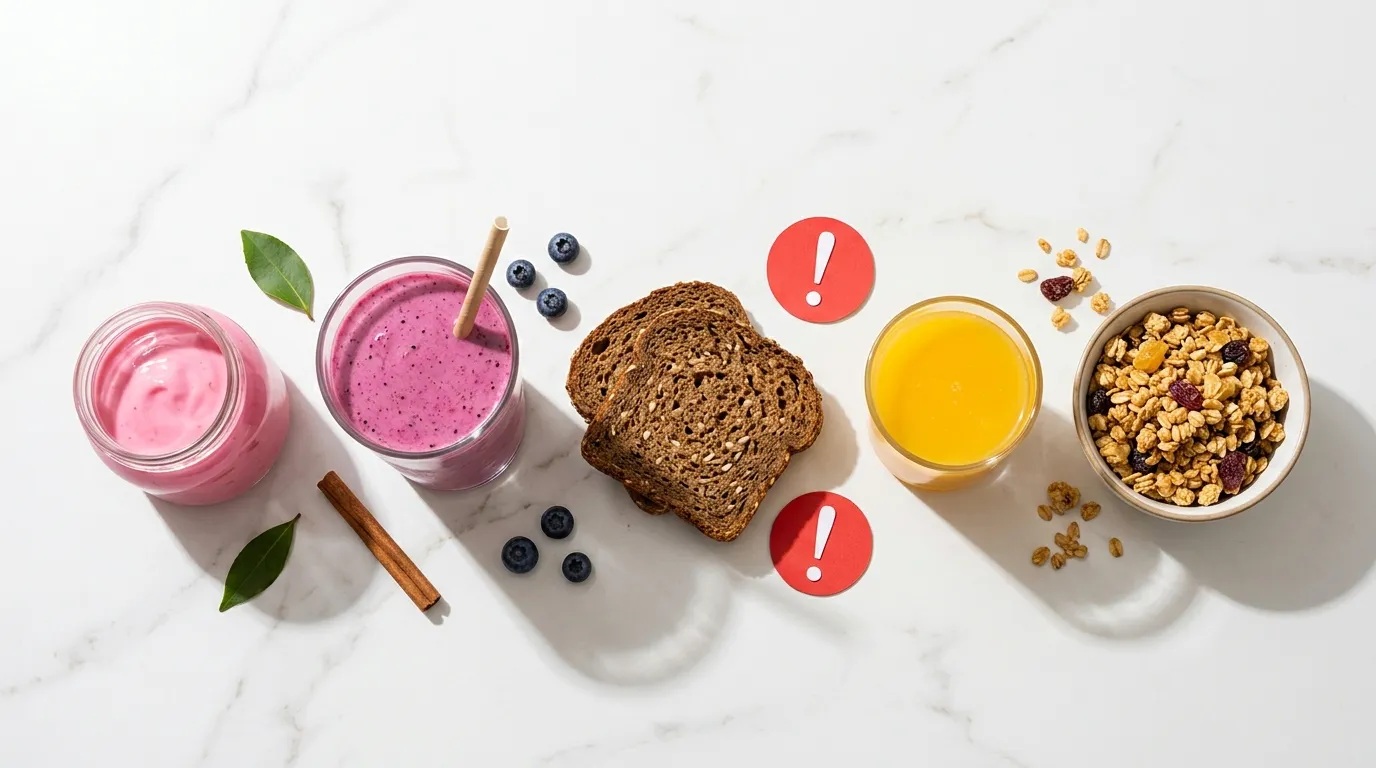
This is one of the most frustrating situations people face when managing blood sugar — and one of the most common. Because the foods most likely to catch you off guard aren’t the obviously bad ones. They’re the ones you think are helping.
Here are five foods that regularly surprise people with their blood sugar impact — and what to eat instead.
Why “Healthy” Doesn’t Always Mean Blood Sugar-Friendly
Before the list — a quick piece of context that makes everything else make sense.
A food can be genuinely nutritious — packed with vitamins, antioxidants, protein, or fiber — and still spike your blood sugar significantly. These two things aren’t mutually exclusive.
A 2025 Stanford Medicine study tracked blood glucose responses in real people eating the same foods — wearing continuous glucose monitors and consuming identical portions of seven different carbohydrates. The finding was striking: the same food produced dramatically different blood sugar responses in different people, depending on their metabolic health, gut microbiota, and genetic predispositions.
This means there’s no single “safe” list that works for everyone. But there are patterns — foods that consistently catch people off guard across a wide range of metabolic profiles. Those are what we’re covering here.
For reference on what blood sugar numbers actually mean: → Blood Sugar Levels Chart: Normal, Prediabetes, and Diabetes Ranges
1. Flavored Yogurt — The Health Halo Trap
Yogurt has a well-deserved reputation as a healthy food. Plain yogurt — particularly Greek yogurt — is genuinely beneficial for blood sugar, containing protein that slows glucose absorption and probiotics that support gut health and insulin sensitivity.
The problem: Flavored yogurt is a completely different food.
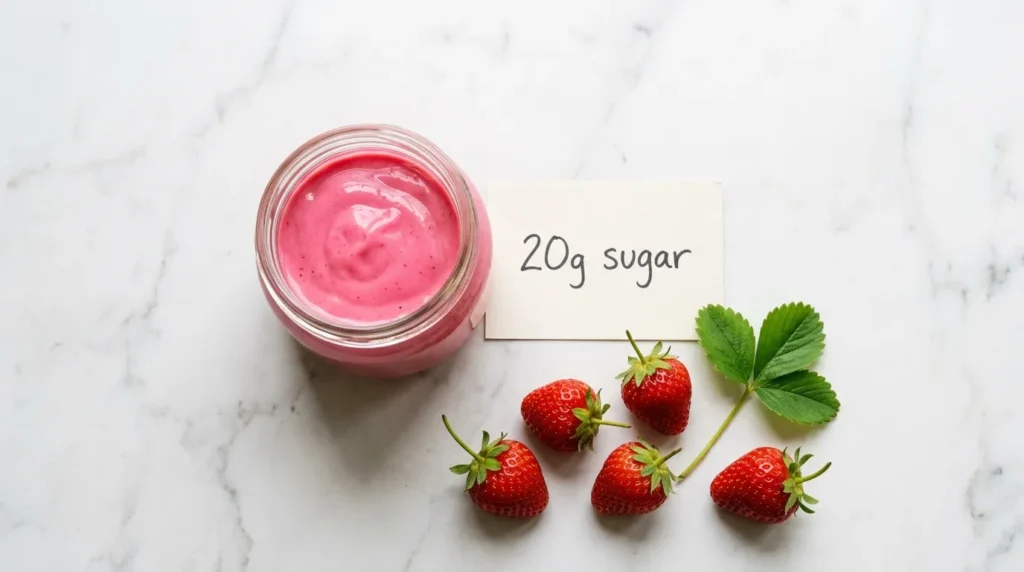
Research cited by AARP’s health team found that flavored yogurts contain almost double the sugar of unflavored versions. A typical 5 to 6oz container of fruit-flavored yogurt can contain 15 to 25 grams of sugar — roughly the same as a small candy bar. The fruit flavor comes primarily from added sugar and fruit concentrate, not whole fruit with its fiber intact.
What happens to your blood sugar: The protein in the yogurt slows absorption somewhat — but not enough to neutralize 20+ grams of added sugar. Most people see a meaningful post-meal spike within 30 to 45 minutes.
What to eat instead: Plain Greek yogurt with fresh berries you add yourself. You get the protein, probiotics, and fiber from the berries — with a fraction of the sugar. A half cup of plain Greek yogurt with a handful of blueberries has roughly 7 to 8 grams of naturally occurring sugar versus 20+ in the flavored version.
Label check: Look for yogurt with less than 7g of sugar per serving — that’s close to what naturally occurs in plain yogurt from lactose. Anything significantly above that has added sugar.
2. Smoothies — Liquid Sugar in a Healthy Disguise
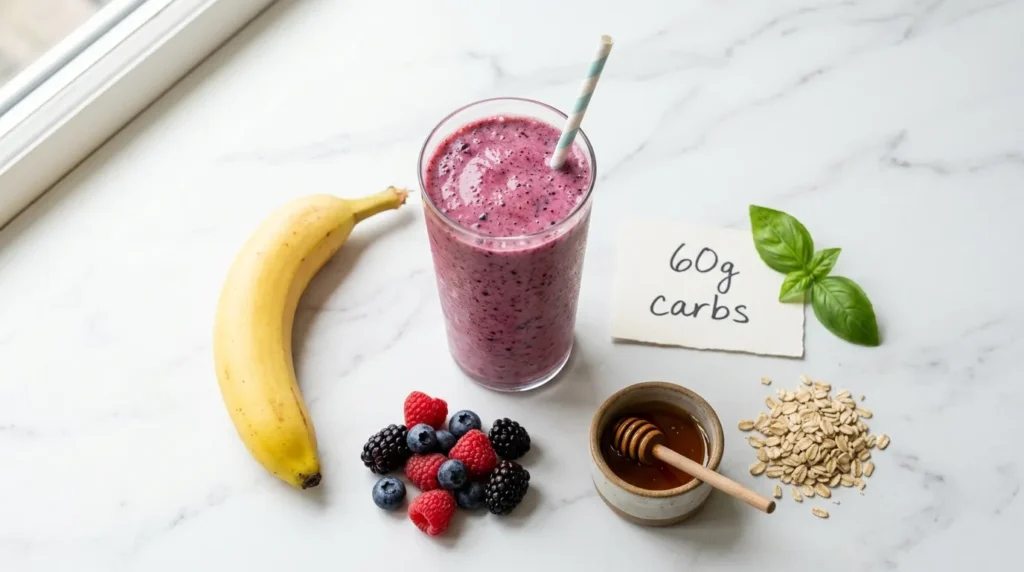
Smoothies have become synonymous with healthy eating — and the ingredients often genuinely are healthy. Spinach, berries, banana, Greek yogurt, almond milk, protein powder, honey, oats. Every one of those ingredients has real nutritional value.
The problem: Liquid form removes the satiety and blood sugar protection that fiber normally provides.
When you eat a whole banana, the fiber in the fruit physically slows how quickly the sugar enters your bloodstream. When you blend that same banana and drink it in 30 seconds, the mechanical process of digestion is bypassed — the sugar hits your bloodstream much faster.
A registered dietitian quoted by HuffPost explained it plainly: smoothies and protein shakes may have nutrient-dense ingredients like fruit, milk, yogurt, oats and honey — but all those ingredients are carbs, and they add up very quickly.
A typical “healthy” smoothie — banana, cup of mixed berries, Greek yogurt, tablespoon of honey, oats — can contain 60 to 80 grams of carbohydrates. That’s more carbohydrates than most people should eat in an entire meal if managing blood sugar.
What happens to your blood sugar: Significant spike, typically within 20 to 30 minutes. The liquid form means faster absorption than almost any solid food equivalent.
What to eat instead: If you want a smoothie, build it around protein and fat rather than fruit. A base of unsweetened protein powder or plain Greek yogurt, half a cup of berries maximum, a tablespoon of almond butter, and water or unsweetened almond milk keeps the carbohydrate load manageable. Skip the banana, honey, and oats entirely.
Or — eat the ingredients instead of blending them. A bowl of plain Greek yogurt with berries and a tablespoon of nut butter is nutritionally similar to a smoothie but absorbs more slowly.
3. Whole Grain Bread — Better Than White, But Not Blood Sugar Neutral
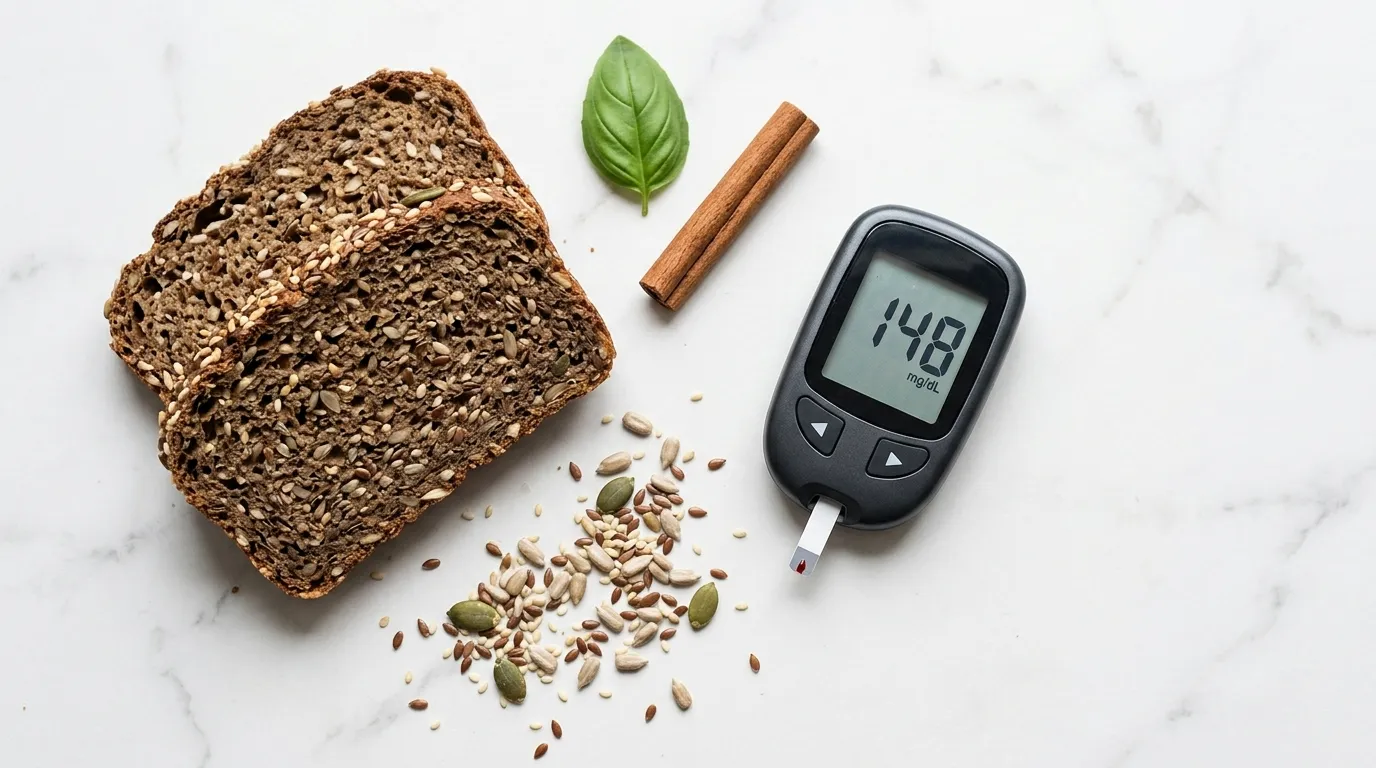
Whole grain bread is genuinely healthier than white bread — more fiber, more nutrients, slower digestion. Switching from white to whole grain is a real improvement.
The problem: “Better than white bread” doesn’t mean it doesn’t spike blood sugar. It still does — just somewhat less dramatically.
Most commercially produced whole grain breads still have a glycemic index in the 50 to 70 range. For comparison, pure glucose scores 100. White bread scores around 70 to 75. Whole grain bread scores 50 to 70 — meaningfully lower, but still capable of producing a significant blood sugar response, especially in larger portions.
The other issue: many breads labeled “whole grain” or “multigrain” aren’t primarily whole grain. If the first ingredient is “enriched wheat flour” — that’s white flour with some nutrients added back. The word “whole” needs to appear before the grain name in the ingredients list.
The 2025 Stanford study finding specifically relevant here: Participants whose blood sugar spiked most after eating bread were more likely to have hypertension — suggesting that individual metabolic factors significantly affect how bread affects blood sugar, beyond just the glycemic index.
What happens to your blood sugar: Depends on portion size, what you eat it with, and your individual metabolic profile. Two slices with protein and fat (eggs, avocado, nut butter) produces a much lower spike than two slices with jam.
What to eat instead: The bread isn’t necessarily the problem — it’s the portion and what’s on it. One slice with protein and healthy fat is a very different blood sugar event than two slices with jam. Sourdough bread specifically has a lower glycemic impact than standard whole wheat because the fermentation process produces acids that slow starch digestion.
4. Fruit Juice — Even 100% Natural
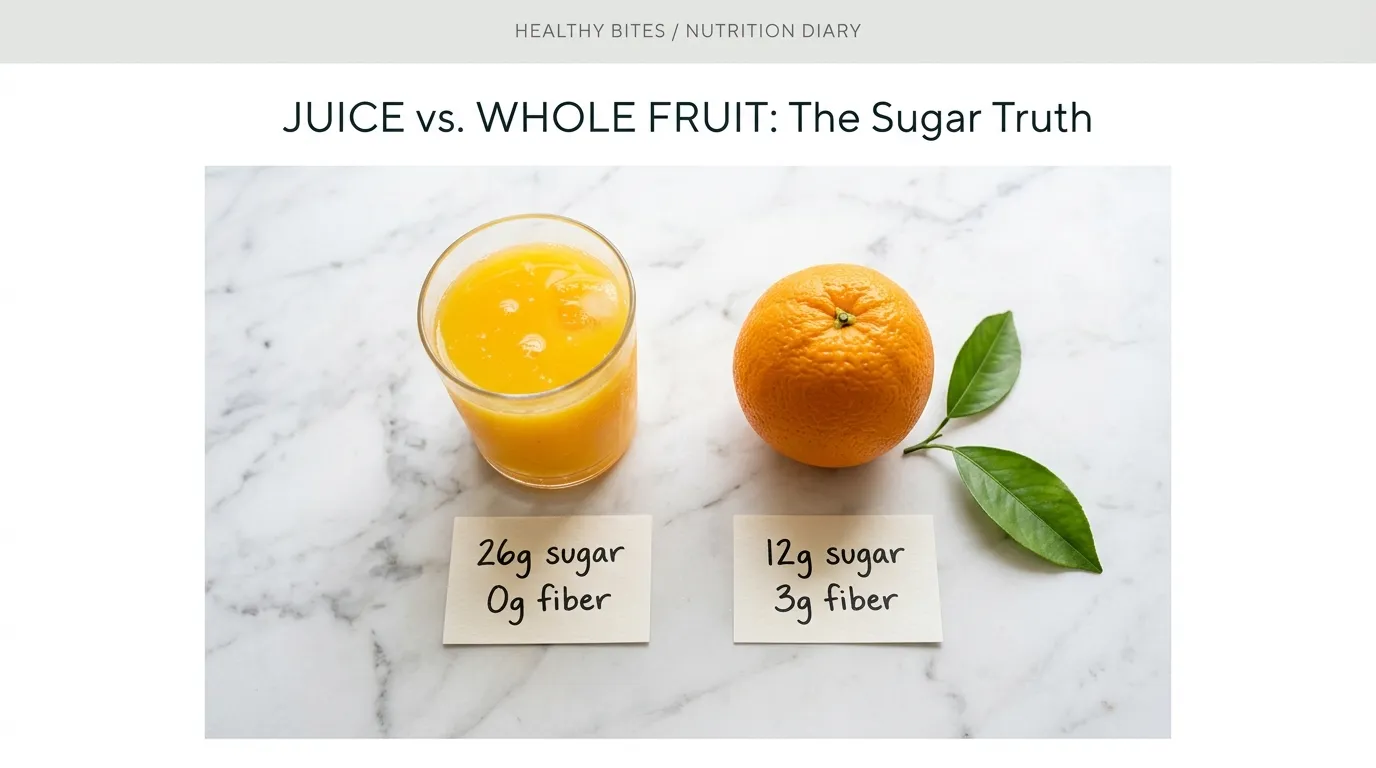
“100% fruit juice, no added sugar” sounds like a health food. And in terms of vitamins and antioxidants, it is — orange juice genuinely contains vitamin C, folate, and potassium.
The problem: Juice removes the fiber that makes whole fruit blood sugar-friendly.
A medium orange has about 12 grams of sugar, 3 grams of fiber, and takes 5 to 10 minutes to eat. An 8oz glass of orange juice has 26 grams of sugar, zero fiber, and takes 30 seconds to drink. The fiber in the whole orange physically slows how quickly the sugar enters your bloodstream. Remove the fiber and you have concentrated liquid sugar.
The glycemic index of orange juice is approximately 50 — similar to many candies. The glycemic load of a full glass is significant because of the volume consumed.
What happens to your blood sugar: A rapid, meaningful spike — typically within 15 to 20 minutes of drinking. The vitamin content doesn’t change the glucose response.
What to eat instead: Eat the whole fruit. An orange, an apple, or a cup of berries gives you the vitamins plus the fiber that slows absorption. If you want something to drink, sparkling water with a squeeze of lemon or lime gives you the refreshment without the sugar load.
5. Granola and “Healthy” Cereals — The Breakfast Trap
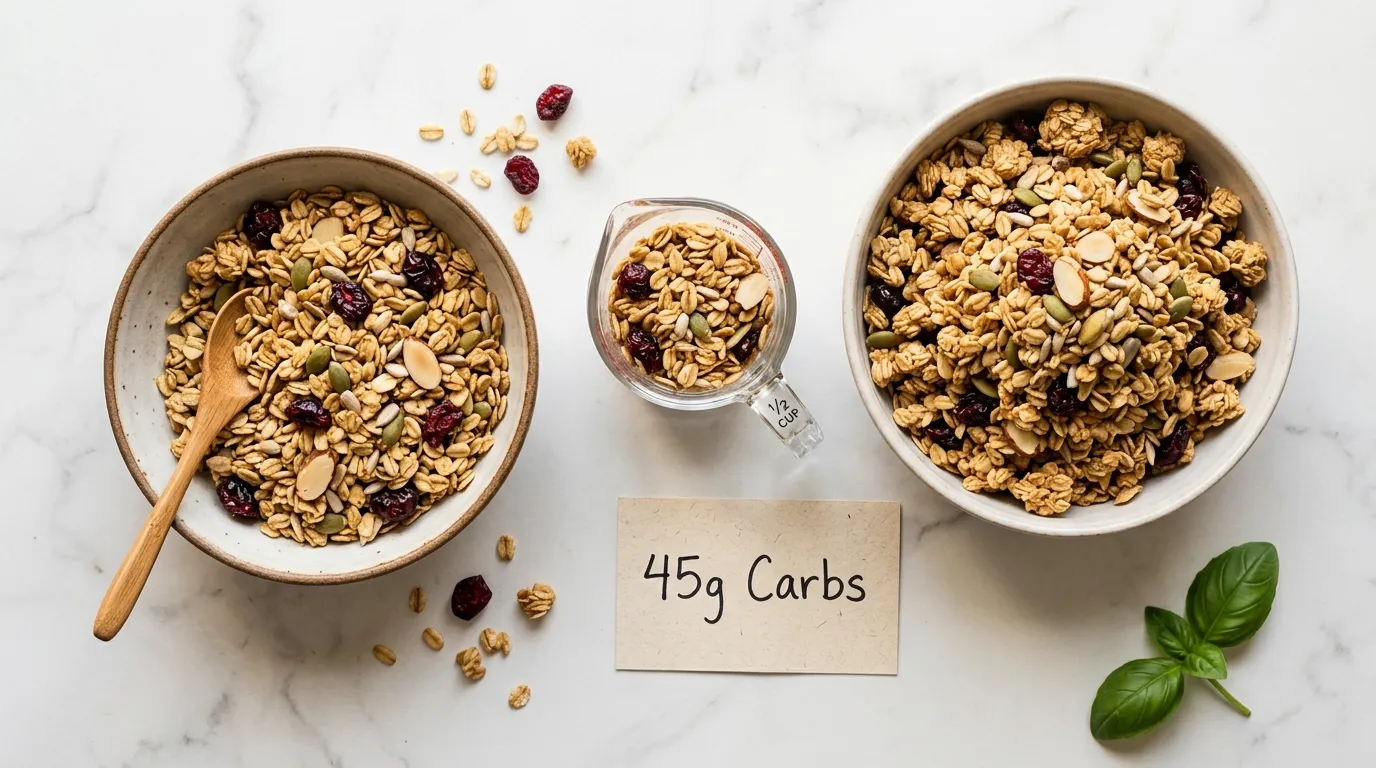
Granola has been marketed as a health food for decades — whole oats, nuts, seeds, dried fruit. And in small amounts with protein, it can be a reasonable choice. The problem is that nobody eats a “small amount” of granola.
A standard serving size on granola labels is typically 1/4 to 1/3 cup — about 3 to 4 tablespoons. Most people pour two to three times that amount. A real-world serving of granola often contains 45 to 60 grams of carbohydrates, plus significant added sugar from honey, maple syrup, or other sweeteners.
“Healthy” cereals follow the same pattern. Cereals marketed as whole grain, high fiber, or heart healthy often contain 30 to 45 grams of carbohydrates per serving — and again, real-world portions are larger than label serving sizes. The fiber helps somewhat, but the carbohydrate load is still significant.
The dried fruit in granola compounds the problem: dried fruit has had its water removed, which concentrates the sugar significantly. A quarter cup of raisins has roughly the same sugar as a full cup of fresh grapes — but you’d never eat a full cup of grapes in one sitting the way you’d throw a handful of raisins into granola.
What happens to your blood sugar: Significant morning spike, typically within 30 to 45 minutes. Morning is particularly relevant because cortisol is naturally higher in the morning — which already raises blood sugar — making a high-carb breakfast more impactful than the same meal at other times of day.
What to eat instead: Eggs with vegetables, plain Greek yogurt with a small amount of berries, or a handful of nuts. If you want something grain-based in the morning, plain steel-cut oats (not instant) with cinnamon and no added sweetener has a much lower glycemic impact than granola — and the fiber content is intact because the oats aren’t processed.
The Pattern Behind All Five
Looking at these five foods together, a pattern emerges:
Processing removes protection. Whole fruit becomes blood-sugar-spiking juice when you remove the fiber. Whole oats become blood-sugar-spiking granola when you add sugar and dry it. The further a food is from its whole form, the faster it typically raises blood sugar.
Liquid form is faster than solid. Smoothies, juice, and flavored milk spike blood sugar faster than the same ingredients eaten whole. Chewing takes time and activates digestive processes that slow glucose absorption. Drinking bypasses this.
Marketing language isn’t a blood sugar guarantee. “Whole grain,” “natural,” “no added sugar,” “heart healthy” — none of these terms mean the food won’t spike blood sugar. They refer to other nutritional properties that are genuinely valuable — just not necessarily for glucose management.
What Actually Protects Blood Sugar at Meals
The most reliable strategy isn’t memorizing a list of foods to avoid — it’s understanding the principles that predict blood sugar impact:
Fiber slows absorption — vegetables, legumes, and whole fruits with skin all help.
Protein reduces post-meal spikes — adding eggs, meat, fish, or Greek yogurt to any carbohydrate-containing meal reduces the glucose response.
Fat slows gastric emptying — avocado, nuts, and olive oil delay how quickly carbohydrates enter the bloodstream.
Order matters — eating vegetables and protein before carbohydrates at the same meal reduces the blood sugar spike compared to eating the carbs first.
→ Foods That Naturally Lower Blood Sugar
→ Best Bedtime Snacks for Diabetics
→ Best Bedtime Drinks to Lower Blood Sugar → Which Foods Spike Blood Sugar Most?
Frequently Asked Questions
Not necessarily bad — but it’s not blood sugar neutral either. Whole grain bread has a lower glycemic index than white bread, but still produces a meaningful glucose response, particularly in larger portions. The key is pairing it with protein and fat, and watching portion size.
It depends on what’s in them. A smoothie built around protein powder, low-sugar vegetables, and a small amount of fruit is very different from a fruit-heavy smoothie with honey and oats. The main risk is the liquid form removing the blood-sugar-protective benefit of fiber, combined with large carbohydrate loads from multiple fruit servings.
In terms of blood sugar impact — yes, often comparable and sometimes worse. 100% orange juice has a similar glycemic index to many sodas, without the fiber that would otherwise slow absorption. The difference is that juice contains vitamins that soda doesn’t — but from a pure blood sugar perspective, juice is not significantly better than sweetened drinks.
Because blood sugar impact is primarily determined by carbohydrate content, fiber, processing level, and liquid vs solid form — not by nutritional value in general. A food can be genuinely nutritious (vitamins, antioxidants, protein) and still significantly raise blood sugar if it contains substantial carbohydrates in a quickly-absorbed form.
Eggs with vegetables consistently produces the most stable blood sugar response — high protein, zero carbohydrates, significant fat. Plain Greek yogurt with berries is a good second option. Steel-cut oats with cinnamon and no sweetener are acceptable if you need something grain-based. Granola, fruit juice, flavored yogurt, and toast with jam are the breakfast combinations most likely to cause significant morning spikes.
Read More in This Series
→ Which Foods Spike Blood Sugar Most? High-GI Foods List
→ Best Bedtime Snacks for Diabetics
→ Best Bedtime Drinks to Lower Blood Sugar
→ Blood Sugar Levels Chart: What Your Numbers Mean
→ How to Lower Blood Sugar Naturally
→ GlucoTrust Review: The Bedtime Blood Sugar Supplement
This article is for informational and educational purposes only. It does not constitute medical advice. Always consult a licensed healthcare professional for personalized guidance on blood sugar management.