

By Laura Collins | Updated May 2026 | 9 min read
This content is for informational purposes only and is not medical advice. Always consult your doctor or dietitian about the best snacking approach for your specific situation and medications.
Should You Eat Before Bed If You Have Diabetes?
This is one of the most common questions people with diabetes ask — and the answer isn’t a simple yes or no.
For some people, eating the right snack before bed genuinely helps stabilize blood sugar overnight and leads to better morning readings. For others, eating before bed raises overnight blood sugar and makes mornings worse.
Which camp you fall into depends on one important question: does your blood sugar tend to go up or down overnight?
If your blood sugar drops overnight (common with insulin use or certain medications), a small bedtime snack prevents dangerous lows and gives you a safer reading in the morning.
If your blood sugar rises overnight (from the Dawn Phenomenon — the natural cortisol surge before waking), a high-carb snack before bed makes things worse. But a small protein-and-fat snack can actually help stabilize things.
If your blood sugar is already elevated at bedtime, most cases call for skipping the snack — additional calories won’t help.
The good news: regardless of which pattern applies to you, there are snack choices that are almost always a better option than others. This article covers what to eat, what to avoid, and the science behind why certain combinations work better overnight.
Not sure what your morning readings mean? → Blood Sugar Levels Chart: Normal, High & Diabetes Ranges
What Makes a Good Bedtime Snack for Diabetics?
The best bedtime snack for blood sugar control has three characteristics:
1. Low in carbohydrates — fewer carbs means less glucose entering the bloodstream while you sleep, when your body can’t manage it through movement or activity.
2. Contains protein — protein digests slowly, keeps blood sugar stable for hours, and prevents overnight hypoglycemia without causing spikes.
3. Contains fiber or healthy fat — both slow glucose absorption and extend the stabilizing effect through the night.
The worst bedtime snacks are the opposite: high in refined carbs and sugar with no protein, fiber, or fat to slow them down. A glass of juice, a handful of crackers, or a bowl of cereal before bed are among the most common causes of unexpectedly high morning readings.
For a refresher on why nighttime matters so much for blood sugar: → Why Blood Sugar Spikes at Night — And What to Do
The 10 Best Bedtime Snacks for Diabetics
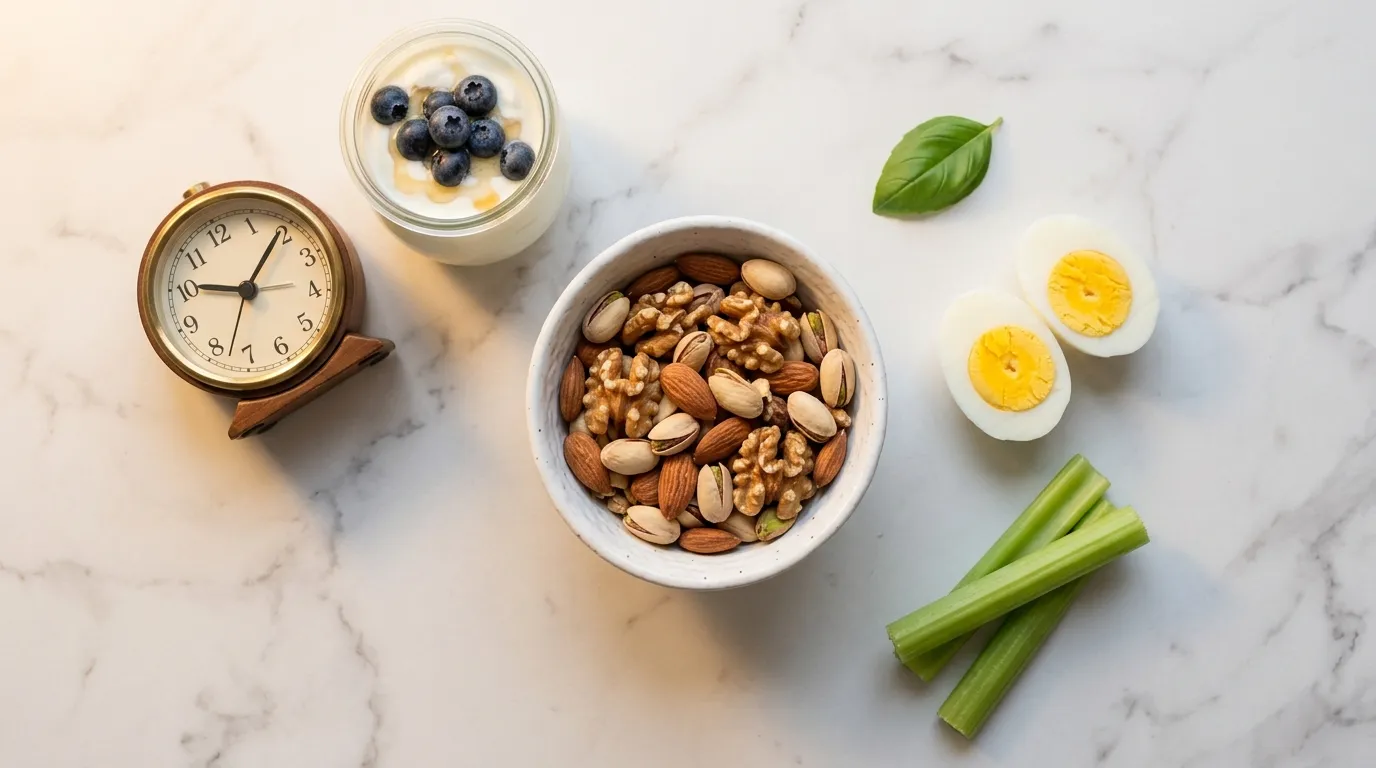
1. A Small Handful of Nuts — Especially Pistachios
Nuts are among the best bedtime options available for people with diabetes — and pistachios have earned special attention from recent research.
A 2025 study from Penn State University found that nighttime pistachio consumption can beneficially reshape the gut microbiome, which plays a crucial role in glucose metabolism and insulin sensitivity. The metabolic benefits extend beyond immediate glucose control, potentially supporting long-term diabetes management through improved gut health and reduced inflammation.
All nuts work well, but the best options for blood sugar are:
- Pistachios — the 2025 research standout, plus high in protein and fiber relative to most nuts
- Almonds — high in vitamin E, magnesium (which supports insulin function), and protein
- Walnuts — especially rich in omega-3 fatty acids that reduce inflammation linked to insulin resistance
- Peanuts — technically legumes, but work like nuts for blood sugar purposes — high protein, good fat
Portion: A small handful — about 1 oz or 28 grams. Not a full bag. The goal is stable blood sugar, not a large calorie load before sleep.
2. Plain Greek Yogurt With a Few Berries
Greek yogurt is one of the highest-protein dairy foods available — with about 15 to 20 grams of protein per cup — and very few carbohydrates compared to regular yogurt.
The protein stabilizes blood sugar through the night. The probiotics may support gut health over time. Adding a small handful of berries provides fiber and antioxidants without a significant glucose load.
What to look for: Plain, unsweetened Greek yogurt only. Flavored Greek yogurt often has as much sugar as a dessert — check the label before buying. Look for less than 10 grams of sugar per serving.
Best combination: Half a cup of plain Greek yogurt with 5 to 6 raspberries or blueberries. Raspberries are particularly good — they’re among the lowest-sugar fruits available.
3. Hard-Boiled Eggs
Eggs are one of the most blood-sugar-neutral foods that exist. They contain zero carbohydrates, about 6 grams of protein per egg, and healthy fat — making them an almost ideal bedtime snack for blood sugar stability.
One or two hard-boiled eggs before bed provides sustained protein release through the night without adding any glucose to the bloodstream. They’re also easy to prepare in advance — make a batch at the start of the week and keep them in the refrigerator.
If you want some texture: eat the egg with 2 to 3 whole-grain crackers to add a small amount of complex carbohydrate and fiber. This combination digests slowly and provides steady, stable energy through the night.
4. A Small Piece of Cheese
Cheese is a reliable bedtime snack for blood sugar — high in protein, high in fat, essentially zero carbohydrates, and satisfying enough to eliminate hunger without disturbing sleep.
String cheese is particularly convenient — pre-portioned, easy to grab, and shelf-stable. One or two sticks before bed is enough to stabilize blood sugar without raising it.
Good choices: String cheese, cheddar, cottage cheese, or mozzarella. Avoid processed cheese products with added sugars.
Especially good combination: A ham and cheese roll-up — slice of deli ham, cream cheese, optional pickle — provides protein, fat, and essentially zero carbohydrates. One of the most blood-sugar-friendly bedtime snacks available.
5. Cottage Cheese With Berries
Cottage cheese has an unusually favorable protein-to-calorie ratio for a dairy food — about 13 grams of protein in just half a cup — with relatively few carbohydrates compared to other options.
Combined with a small amount of berries for fiber and antioxidants, this is one of the best bedtime snack combinations for both blood sugar stability and satiety.
Best combination: Half a cup of cottage cheese (full fat or low fat — avoid fat-free, which often has added sugar) with a small handful of blueberries or raspberries.
6. Apple Slices With Nut Butter
An apple alone before bed would cause a blood sugar spike from the natural sugar content. But add a tablespoon of almond butter or peanut butter, and the combination is genuinely blood-sugar-friendly.
The protein and healthy fat in the nut butter dramatically slow the absorption of the apple’s natural sugars — turning a potential spike into a gentle, slow glucose rise that stabilizes blood sugar through the night rather than disrupting it.
Sprinkle cinnamon on top. Some research suggests cinnamon helps stabilize blood sugar — and it makes the combination taste like something from a dessert menu.
Key rule: One small to medium apple maximum, and one tablespoon of nut butter (not two). Portion control matters here — the apple still contains natural sugar that adds up with larger servings.
7. Avocado on Whole Grain Crackers
Avocado is almost entirely healthy fat and fiber, with very few carbohydrates. Spread on 2 to 3 whole grain crackers, you get a combination that slows glucose absorption dramatically while providing satisfying fat and fiber.
This works particularly well for people who need something more substantial before bed — the fat content in avocado is filling enough to prevent hunger from disrupting sleep.
Best version: 2 to 3 whole grain crackers (look for 3+ grams of fiber per serving) with a thin spread of avocado. Add a pinch of salt and optional lemon juice.
8. A Small Bowl of Plain Oatmeal — Made Right
Oatmeal gets a complicated reputation in diabetes management — and for good reason. Instant oatmeal spikes blood sugar fast and is a poor choice before bed. But rolled oats or steel-cut oats, made properly and eaten in the right portion, can be a good bedtime option because of the beta-glucan fiber that slows glucose absorption dramatically.
The key details:
- Rolled oats or steel-cut only — never instant
- Half a cup cooked is the right portion
- Add a tablespoon of almond butter for protein and fat
- Add cinnamon for additional glucose-stabilizing effect
- No sugar, no honey, no flavored packets
This combination produces a slow, stable glucose rise rather than a spike — keeping blood sugar steady through the night.
9. Celery With Almond Butter or Cream Cheese
Celery is one of the most blood-sugar-neutral vegetables available — almost entirely water and fiber, with essentially no glucose content. Combined with almond butter or cream cheese for protein and fat, it’s a genuinely satisfying snack that adds nothing to blood sugar.
This is an excellent option for people whose blood sugar is already on the higher side at bedtime and who need something to eat but don’t want to raise it further.
10. Non-Starchy Vegetables With Hummus
Raw vegetables — carrot sticks, cucumber slices, cherry tomatoes, celery, bell pepper strips — are very low in carbohydrates and high in fiber. Combined with hummus for protein and healthy fat, they provide a filling, blood-sugar-friendly snack that works well before bed.
Portion note: Even with non-starchy vegetables, hummus portion matters — stick to 2 to 3 tablespoons rather than a large serving to keep the carbohydrate load modest.
The Worst Bedtime Snacks for Diabetics
Avoid these before bed — they’re among the most common causes of high morning blood sugar:
Fruit juice — liquid sugar with zero fiber. One glass can significantly raise overnight blood sugar.
Regular cereal or granola — high GI, high carb, minimal protein. Even “healthy” granola often contains as much sugar as candy.
White bread or crackers — refined carbs without enough fiber to slow absorption.
Sweetened yogurt — regular flavored yogurt often has 20+ grams of sugar. Even “light” versions are problematic.
Chips or pretzels — high in refined carbs, essentially zero protein or fat to slow absorption.
Fruit alone — especially bananas, grapes, mangoes, and pineapple which are high in natural sugar. Pair any fruit with protein and fat.
Ice cream or desserts — obvious but worth stating — the sugar and refined carb combination is particularly disruptive to overnight blood sugar.
What Time Should You Eat Your Bedtime Snack?
Timing matters almost as much as what you eat.
The general guideline: eat your bedtime snack 30 to 60 minutes before sleep — not immediately before lying down, and not more than 2 hours before bed.
Too close to sleep and you may not give your body enough time to begin processing the food, which can cause glucose to peak as you’re trying to sleep.
Too early (more than 2 hours before bed) and the stabilizing effect may have worn off by the time you need it most — the early morning hours when the Dawn Phenomenon typically peaks.
How Much Should You Eat?
Keep bedtime snacks small. The goal is blood sugar stability — not a meal.
A good bedtime snack for a diabetic is typically:
- Under 15 to 20 grams of carbohydrates — enough to provide some glucose without overwhelming your overnight management
- At least 7 to 10 grams of protein — enough to stabilize blood sugar through the night
- 100 to 200 calories total — a snack, not a meal
Check your blood sugar 2 hours after your bedtime snack if you’re testing regularly — this tells you how your body specifically responds to different options.
The Overnight Challenge — When Snacks Aren’t Enough
For many people with diabetes, making the right bedtime snack choice produces meaningful improvements in morning readings. But for others — particularly those dealing with the Dawn Phenomenon — even perfect dietary choices don’t fully solve elevated morning blood sugar.
The Dawn Phenomenon happens when your body’s natural cortisol surge in the early morning hours signals the liver to release stored glucose — raising blood sugar even without eating anything. Dietary choices can reduce the baseline, but they can’t fully suppress this hormonal process.
This is one reason people managing blood sugar find that addressing the nighttime metabolic window requires more than food choices alone.
GlucoTrust was specifically designed for this situation — the only mainstream blood sugar supplement formulated to be taken before bed, combining blood sugar support ingredients with 15 sleep-enhancing herbs that promote the deep, restorative sleep that supports healthier morning glucose readings.
For people whose morning blood sugar remains stubbornly elevated despite making the right bedtime snack choices — GlucoTrust addresses the metabolic mechanisms that happen while you sleep, not just the glucose you consume before you sleep.
→ Learn more about GlucoTrust — Official Website
Quick Reference — Best Bedtime Snacks at a Glance
| Snack | Protein | Carbs | Best For |
|---|---|---|---|
| Handful of pistachios/almonds | High | Low | Most people |
| Plain Greek yogurt + berries | Very high | Low-moderate | Hunger + stability |
| Hard-boiled egg(s) | High | Zero | Simplest option |
| String cheese | Moderate | Zero | Quick and easy |
| Cottage cheese + berries | High | Low | Filling option |
| Apple + almond butter | Moderate | Moderate | Needs fruit fix |
| Avocado on whole grain crackers | Low | Low-moderate | Filling, savory |
| Celery + almond butter | Moderate | Very low | Blood sugar already high |
| Vegetables + hummus | Moderate | Low | Savory, light |
Read More in This Series
→ Best Bedtime Drinks to Lower Blood Sugar Naturally
→ Why Blood Sugar Spikes at Night — And What to Do
→ How Sleep Quality Impacts Blood Sugar Levels
→ Foods That Naturally Lower Blood Sugar: The Complete Guide
→ Which Foods Spike Blood Sugar Most? High-GI Foods List
→ Blood Sugar Levels Chart: What Your Numbers Mean
Frequently Asked Questions
Should diabetics eat before bed? It depends on your individual blood sugar pattern overnight. If your blood sugar tends to drop during the night — common with insulin or certain medications — a small protein-rich snack can prevent dangerous lows. If your blood sugar rises overnight from the Dawn Phenomenon, a small protein-and-fat snack (not carbs) can help moderate the rise. Always discuss bedtime snacking with your diabetes care team based on your specific medications and patterns.
What is the best snack to eat before bed to lower blood sugar? No snack actually “lowers” blood sugar — but the right combination (protein + healthy fat + minimal carbs) prevents blood sugar from rising further overnight. A small handful of nuts, a hard-boiled egg, or plain Greek yogurt are among the most reliable options for preventing overnight spikes and high morning readings.
Can fruit be eaten before bed if you have diabetes? Fruit alone before bed is generally not recommended because of its natural sugar content. However, pairing a small amount of low-sugar fruit (berries are best) with protein and fat changes the picture significantly — the protein and fat slow absorption enough to make the combination much more blood-sugar-friendly.
What should a diabetic not eat before bed? Avoid high-carb, high-sugar foods with no protein or fat to slow them down. The worst offenders: fruit juice, sweetened beverages, regular cereal, white bread, crackers, candy, and desserts. These cause blood sugar to rise rapidly while you sleep, when your body has no way to manage the glucose through activity.
How big should a bedtime snack be for someone with diabetes? Small — typically under 15 to 20 grams of carbohydrates and 100 to 200 calories total. The goal is blood sugar stabilization, not a meal. Larger snacks raise blood sugar overnight regardless of how blood-sugar-friendly the ingredients are.
Does eating before bed raise morning blood sugar? It depends entirely on what you eat. High-carb snacks raise morning blood sugar significantly. But a small protein-and-fat snack with minimal carbohydrates often has little effect on morning readings — and for people who experience overnight hypoglycemia, it improves morning readings by preventing a dangerous low followed by a hormonal rebound.
This article is for informational and educational purposes only. It does not constitute medical advice. Always consult a licensed healthcare professional or registered dietitian for personalized guidance on diabetes management and nutrition.
Laura Collins is the lead content researcher at Wellness Balance Pro, specializing in metabolic health and blood sugar management.