

By Laura Collins | Updated July 2026 | 12 min read
Affiliate disclosure: This page contains affiliate links. If you purchase through our links we may earn a small commission at no extra cost to you.
Medical disclaimer: This content is for informational purposes only and is not medical advice. Always consult your doctor before starting berberine.
Our Editorial Process: Berberine supplements are not tightly regulated, and independent testing has repeatedly found real quality problems in this category — bottles with less berberine than the label claims, unclear forms, and hidden proprietary blends. This guide focuses on what actually separates a good berberine supplement from a wasted purchase.
Not all berberine supplements are created equal — and the differences aren’t just marketing. The form of berberine, the actual dose per capsule, and whether a brand is willing to prove what’s in the bottle all genuinely affect whether you get real results or an expensive placebo.
This guide walks through exactly what to check before buying, and where a berberine-containing formula like GlucoTonic fits into the picture.
For the full science on how berberine works: → Berberine: The Natural Ozempic? What the Science Actually Shows
The 4 Things That Actually Matter
1. Which Form of Berberine
This is the single biggest factor, and it’s the one most people never think to check.
Berberine HCl is the standard form and the one used in almost every clinical trial that’s shown real blood sugar benefits. It’s well-studied, but your body only absorbs a small fraction of what you swallow — often less than 1%. This is why the clinical dose is relatively high: 500mg, three times a day.
Berberine phytosome wraps the berberine molecule in a fat-based coating that helps it pass through your gut wall more easily. This can boost absorption significantly — some studies show 5 to 10 times higher blood levels compared to the same amount of plain HCl.
Dihydroberberine (DHB) is what your body naturally converts berberine into anyway. Taking it directly skips a step, and studies show it reaches roughly 5 times higher blood levels than the same dose of HCl. The catch: it costs more, and there’s less long-term safety data since it’s newer to the supplement market.
The honest bottom line: Berberine HCl remains the safest recommendation for most people, simply because it has the longest track record. The enhanced forms (phytosome, DHB) are promising and reasonable to consider — especially if standard berberine gives you stomach trouble — but they’re not automatically “better” just because they’re newer or pricier.
2. The Actual Dose Per Capsule
Check the label, not just the front of the bottle.
For berberine HCl: 500mg per capsule is the standard clinical dose. Some products use 250mg or 333mg per capsule — not wrong, but you’ll need more capsules per day to reach the amount used in actual research (1,000-1,500mg total daily).
For phytosome or DHB forms: Because these absorb so much better, the effective dose is much smaller. 100-250mg of DHB or phytosomal berberine can do a similar job to 500mg of standard HCl. If a bottle of “enhanced” berberine is dosed the same as standard HCl (500mg+), that’s worth a second look — it may just be marketing language on a standard product.
3. Third-Party Testing — The Part Companies Sometimes Skip
Because berberine supplements aren’t tightly regulated, the FDA doesn’t verify that what’s on the label matches what’s actually in the capsule. Independent testing organizations have found real discrepancies in this category — including one widely reported case where a certificate of analysis showed a product contained meaningfully less berberine than the label claimed.
What to look for:
- USP Verified mark
- NSF Certified (particularly “NSF Certified for Sport,” which is the most rigorous tier)
- A publicly available Certificate of Analysis (COA) from an independent lab — and check the date. An outdated COA from a year or two ago doesn’t tell you anything about the batch you’re actually buying.
A brand that publishes current, verifiable testing is telling you something important: they’re confident enough in their product to let someone else check their work.
4. No Hidden Proprietary Blends
If a product lists “berberine blend” or “metabolic complex” without stating exactly how many milligrams of berberine are actually inside, that’s a red flag. You have no way to know if you’re getting a therapeutic dose or a token amount designed mainly for the label.
A trustworthy product tells you exactly: the form of berberine, the milligrams per capsule, and ideally backs it up with a COA.
Standalone Berberine vs. Combination Formulas
You’ll generally find berberine sold two ways:
Standalone berberine supplements — just berberine (HCl, phytosome, or DHB), dosed to match or approximate clinical trial amounts. Good if you want to control your own dose precisely and know exactly what you’re taking.
Combination formulas — berberine paired with other blood sugar-supportive ingredients like cinnamon, chromium, or bitter melon. These can be a reasonable option if you want broader support in one product, as long as the berberine dose itself is still clearly stated and reasonable.
Where GlucoTonic Fits
GlucoTonic is one of the blood sugar supplements we’ve reviewed that includes berberine as part of its formula, alongside other blood-sugar-supportive ingredients.
What this means practically: If you’re interested in berberine specifically as a standalone, high-dose intervention closely matching clinical trial protocols, a dedicated berberine HCl supplement dosed at 500mg per capsule gives you the most direct control.
If you’re looking for a broader blood sugar support formula where berberine is one part of a larger approach — alongside other ingredients working through different mechanisms — GlucoTonic is worth reviewing in full.
→ Read our full GlucoTonic review
→ GlucoTonic Ingredients: What’s Inside
Neither approach is wrong — it depends on whether you want berberine as the primary intervention or as one supportive piece of a broader formula.
Realistic Expectations, Regardless of Which You Choose
No matter which berberine product you pick, keep these in mind:
It takes 8-12 weeks to see full effects, particularly for A1C, which reflects a 3-month average.
It’s not a substitute for diabetes medication. People with diagnosed Type 2 diabetes should not replace prescribed treatment with a supplement.
“Nature’s Ozempic” oversells the weight loss story. Berberine studies show modest results — around 5 pounds over several months — not the dramatic changes associated with GLP-1 medications. → Berberine vs Ozempic: The Complete Comparison
Talk to your doctor before starting if you take any prescription medication — the interaction list for berberine is genuinely long. → Berberine Side Effects: What to Know Before You Take It
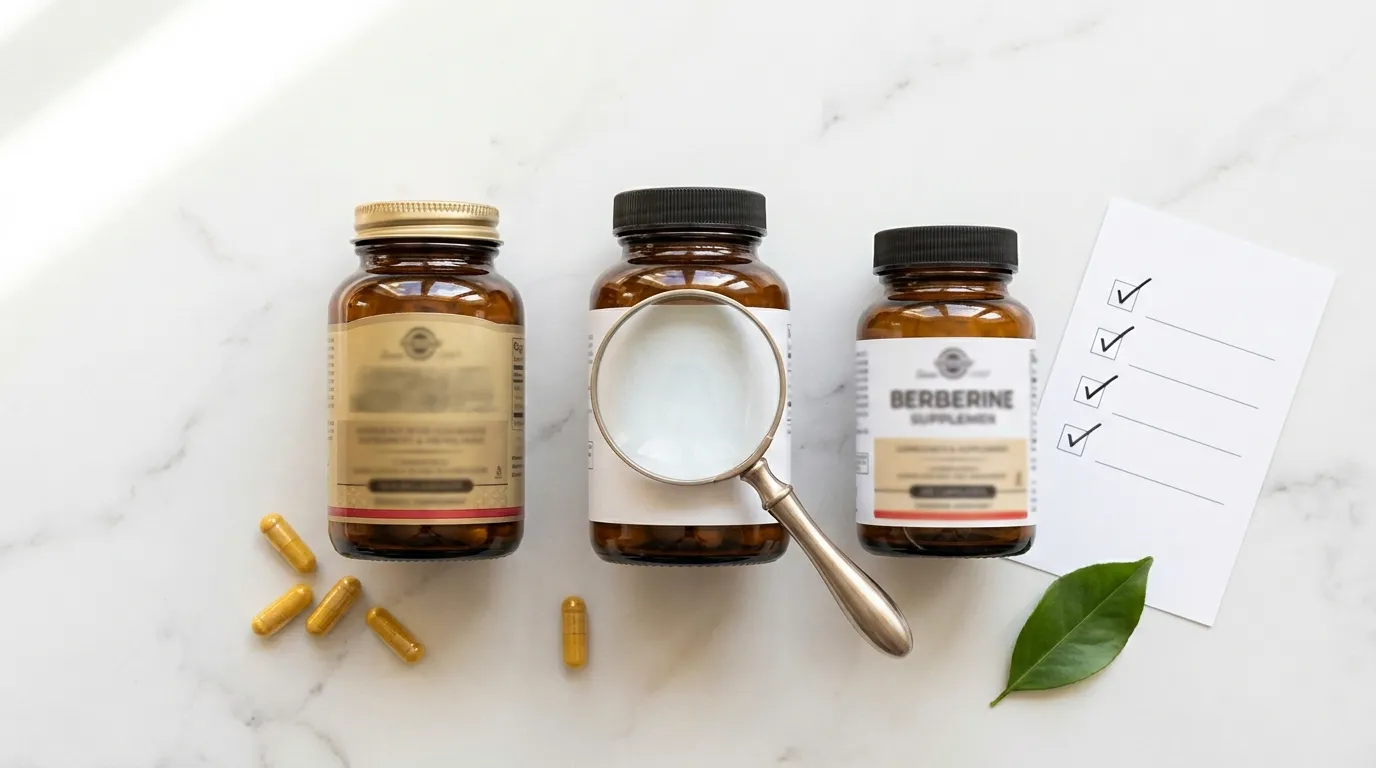
Quick Checklist Before You Buy
☐ Does the label state the exact form (HCl, phytosome, or DHB)?
☐ Is the milligram dose per capsule clearly stated?
☐ Does the dose match or reasonably approximate clinical amounts?
☐ Is there a current, publicly available Certificate of Analysis?
☐ Does it carry USP or NSF certification?
☐ Is there a real company address and contact information?
☐ Does it avoid vague "proprietary blend" language?
If a product checks most of these boxes, it’s a reasonable choice. If it fails several, keep looking.
Frequently Asked Questions
What’s the best form of berberine to buy? Berberine HCl remains the safest default recommendation because it has the longest research history. Phytosome or dihydroberberine forms offer better absorption at lower doses and are worth considering, especially if standard berberine causes stomach upset for you.
Is more expensive berberine always better? Not necessarily. Price often reflects the form (enhanced-absorption versions cost more) and third-party testing, both of which are legitimate value-adds. But an expensive product with vague labeling and no testing is not automatically better than an affordable, transparent one.
How do I know if a berberine supplement is actually good quality? Check for a stated form, a clear milligram dose per capsule, a current Certificate of Analysis from independent testing, and ideally USP or NSF certification. Avoid products with vague “proprietary blend” labeling that hides the actual berberine content.
Should I buy standalone berberine or a formula like GlucoTonic that includes it? It depends on your goal. Standalone berberine gives you precise control over dosing to match clinical research. A combination formula like GlucoTonic offers broader blood sugar support through multiple ingredients working together, with berberine as one component.
Is dihydroberberine worth the extra cost? For some people, yes — particularly if you’ve had stomach issues with standard berberine or want a smaller pill count. The trade-off is less long-term safety data and higher cost. Standard berberine HCl remains the more conservative choice with the longest track record.
Read More on Wellness Balance Pro
→ Berberine: The Natural Ozempic? What the Science Actually Shows
→ Berberine vs Ozempic: The Complete Comparison
→ Berberine Dosage Guide: How Much to Take and When
→ Berberine Side Effects: What to Know Before You Take It
→ GlucoTonic Review: Blood Sugar Support with Berberine
This article is for informational and educational purposes only. It does not constitute medical advice. Always consult a licensed healthcare professional before starting berberine.