

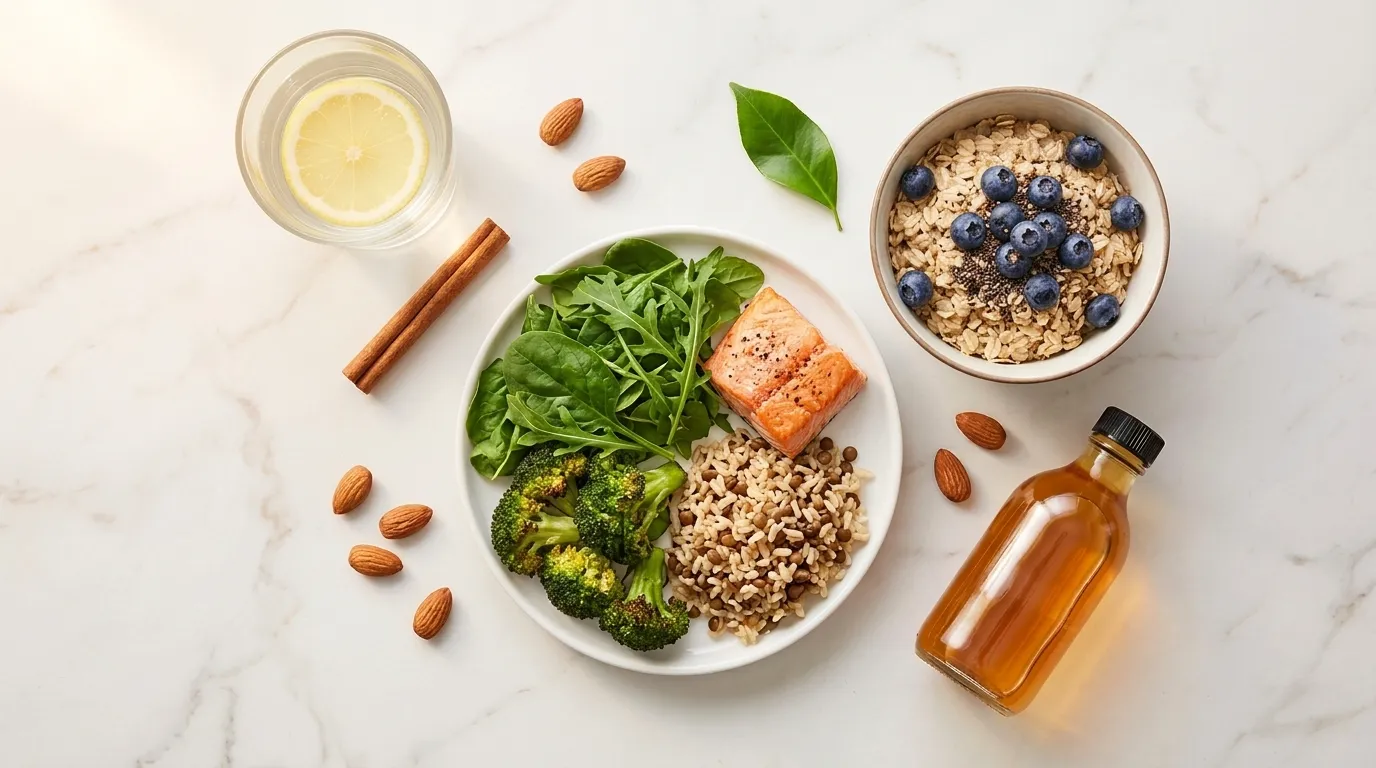
By Laura Collins | Updated May 2026 | 9 min read
This content is for informational purposes only and is not medical advice. Always consult your doctor before making significant dietary changes, especially if you are managing diabetes or taking medication.
Diet Is the Most Powerful Tool You Have
Of all the natural ways to lower blood sugar — exercise, sleep, stress management, supplements — diet has the single biggest impact on your daily readings.
Not because other factors don’t matter. They do. But what you eat determines how much glucose enters your bloodstream at every single meal, three times a day, every day. Get that right, and everything else becomes easier.
The good news: you don’t need an extreme diet, expensive meal plans, or a nutritionist. You need to understand a few core principles — and apply them consistently.
This article gives you exactly that. Ten practical, evidence-based dietary tips that actually move blood sugar numbers in the right direction.
Not sure what numbers you’re working with? → Blood Sugar Levels Chart: Normal, High & Diabetes Ranges
The One Thing to Understand Before the Tips
Before the list — here’s the single most important concept in dietary blood sugar management:
It’s not just what you eat. It’s what you eat it with.
Carbohydrates raise blood sugar. But how fast they raise it — and how high the spike goes — depends enormously on what else is on the plate.
Eating carbs alone = fast, high spike. Eating the same carbs with protein + fiber + fat = slow, gentle rise.
This is why two people can eat the same amount of rice and have completely different blood sugar responses — depending on whether they ate it with salmon and broccoli, or ate it alone.
Keep this principle in mind as you read every tip below. It’s the thread that connects all of them.
10 Dietary Tips That Actually Lower Blood Sugar
Tip 1 — Cut Liquid Sugar First
This is the highest-impact single dietary change most people can make — and the fastest to show results.
Sugary drinks — juice, soda, sweetened coffee, sports drinks, smoothies, flavored teas — deliver glucose directly into your bloodstream with zero fiber to slow it down. The spike is fast, high, and followed by a hard crash that drives cravings for more sugar.
A single glass of orange juice contains as much sugar as several pieces of whole fruit — but without the fiber that makes whole fruit much gentler on blood sugar.
What to do: Replace sugary drinks with water, unsweetened sparkling water, black coffee, or unsweetened green tea. Do this one change alone for one week and check your morning readings. Most people see measurable improvement.
What to watch for: Hidden sugars in drinks you think are healthy — flavored kombucha, vitamin water, protein shakes, and “green” smoothies often contain significant added sugar.
Tip 2 — Use the Plate Method at Every Meal
You don’t need to count calories, track macros, or follow a complicated meal plan. The plate method is simpler and works just as well for most people.
Here’s how it works:
- Half your plate: non-starchy vegetables — leafy greens, broccoli, cauliflower, peppers, cucumber, zucchini, tomatoes
- One quarter: lean protein — chicken, fish, eggs, tofu, beans, lentils
- One quarter: complex carbs — brown rice, sweet potato, quinoa, whole grain bread, rolled oats
That’s it. This one framework, applied consistently, reduces the glucose load at every meal without eliminating any food group or requiring any special ingredients.
Why it works: The vegetables provide fiber that slows glucose absorption from the carb quarter. The protein slows digestion overall and keeps you full longer. The result is a gentler, more gradual glucose rise instead of a spike.
Tip 3 — Eat Vegetables Before Carbs at Every Meal
This is one of the most underrated dietary strategies for blood sugar — and one of the simplest to implement.
Research shows that eating vegetables and protein before carbohydrates at the same meal reduces the post-meal blood sugar spike by up to 30%. You don’t change what you eat — just the order you eat it.
The reason: fiber from vegetables coats the digestive tract and slows how quickly carbs are broken down and absorbed. Protein eaten first also triggers early satiety hormones that slow gastric emptying.
What to do: Start every meal with a few bites of vegetables or protein before you touch the carbs. At a restaurant, eat the salad before the bread. At dinner, eat the broccoli before the rice. Takes zero extra effort and has a measurable effect.
Tip 4 — Choose Complex Carbs Over Refined Ones
Not all carbohydrates are equal. The difference between white bread and whole grain bread isn’t just fiber — it’s how fast they release glucose into your bloodstream.
Refined carbs — white bread, white rice, regular pasta, instant oats, most commercial cereals — have had their fiber and nutrients stripped out during processing. Without fiber, they digest quickly and dump glucose into your blood rapidly.
Complex carbs — whole grains, legumes, sweet potatoes, rolled oats — still contain their natural fiber. That fiber slows digestion significantly, producing a much gentler, more gradual glucose rise.
Simple swaps:
| Instead of | Choose | Why |
|---|---|---|
| White bread (GI 75) | Sourdough or whole grain (GI 54) | Much slower glucose release |
| White rice (GI 72) | Basmati or brown rice (GI 58) | Lower glycemic index |
| Instant oats (GI 79) | Rolled or steel-cut oats (GI 55) | More fiber intact |
| Regular pasta | Al dente pasta or chickpea pasta | Slower digestion |
| Cornflakes (GI 81) | Rolled oats with berries | Completely different impact |
For the full list of foods that spike blood sugar: → Which Foods Spike Blood Sugar Most? High-GI Foods List
Tip 5 — Eat More Fiber Every Day
Fiber is the single most important nutrient for blood sugar management — and most people don’t get nearly enough of it.
Here’s why fiber is so powerful: it slows down how quickly food leaves your stomach and how quickly glucose enters your bloodstream. More fiber at a meal = smaller, slower glucose rise. Consistently more fiber in your diet = lower A1C over time.
The target is 25 to 30 grams of fiber per day. Most people eating a Western diet get 10 to 15 grams.
Easiest ways to add more fiber:
- Add half a cup of black beans or lentils to any meal — one cup provides 15 grams of fiber
- Add a tablespoon of chia seeds or ground flaxseed to yogurt, oatmeal, or smoothies
- Eat the skin on fruits and vegetables — that’s where most of the fiber is
- Choose whole fruit over juice — an orange has 3 grams of fiber, orange juice has almost none
- Swap white rice for a mix of rice and lentils
Tip 6 — Add Protein to Every Meal and Snack
Protein does two important things for blood sugar: it slows the digestion of any carbs eaten with it, and it keeps you full long enough to avoid reactive snacking on high-sugar foods.
When you eat carbs alone — a piece of toast, a bowl of cereal, a handful of crackers — blood sugar rises quickly. When you add protein to the same carbs, digestion slows and the glucose rise is gentler.
High-protein foods that work well for blood sugar:
- Eggs — versatile, zero carbs, keeps you full for hours
- Greek yogurt — high protein, moderate carbs, probiotics
- Fatty fish — salmon, mackerel, sardines — pure protein with anti-inflammatory omega-3s
- Chicken and turkey — lean, zero carbs
- Beans and lentils — protein and fiber combined — one of the best blood sugar foods available
- Nuts and seeds — protein, fiber, and healthy fats together
The most impactful change many people can make: Replace a carb-only breakfast (cereal, toast, muffin) with a protein-based breakfast (eggs, Greek yogurt, or oats with nuts and seeds). This single change often produces the most noticeable improvement in morning readings within days.
Tip 7 — Use Apple Cider Vinegar Before Meals
Apple cider vinegar works by slowing how quickly your stomach empties after eating — which means glucose from that meal enters your bloodstream more gradually instead of all at once.
A 2021 review found that consuming one to two tablespoons of apple cider vinegar with meals significantly decreased fasting blood sugar. The effect is modest but consistent — and it costs almost nothing.
How to use it: Mix 1 tablespoon of raw unfiltered apple cider vinegar in a large glass of water. Drink it 10 to 15 minutes before your largest meal of the day.
Important: Always dilute it — drinking apple cider vinegar straight can damage tooth enamel. If you have kidney disease, skip this one and check with your doctor.
Tip 8 — Control Portion Sizes — Especially for Carbs
Even healthy, low-GI carbohydrates raise blood sugar if you eat too much of them. Portion size matters.
This doesn’t mean counting every gram. It means being aware of carb portions and applying a simple rule: one quarter of your plate, as the plate method suggests. Not half. Not three quarters.
Visual portion guides for common carbs:
- Brown rice: one closed fist = one portion
- Sweet potato: one medium potato = one portion
- Whole grain bread: one slice = one portion
- Oats: half a cup dry = one portion
- Pasta: one cup cooked = one portion
Eating slightly portioned, consistent carb amounts at each meal — rather than large variable amounts — also helps stabilize blood sugar patterns throughout the day. Your pancreas responds better to predictable glucose loads than to wildly varying ones.
Tip 9 — Watch for Hidden Sugars in Packaged Foods
This is where many people’s careful dietary efforts get quietly undermined.
Sugar hides under many names on ingredient labels. If any of these appear in the first three ingredients of a packaged food, the product is likely high in sugar regardless of how healthy it looks on the front of the package:
- Dextrose, maltose, sucrose, fructose, glucose
- High fructose corn syrup, corn syrup solids
- Cane sugar, cane juice, evaporated cane juice
- Agave nectar, honey, maple syrup (still sugar for blood sugar purposes)
- Fruit juice concentrate
Common culprits that surprise people:
- Flavored yogurt — often contains as much sugar as ice cream
- Granola and granola bars — frequently very high sugar
- Salad dressings — especially low-fat versions which replace fat with sugar
- Pasta sauce — many commercial brands add significant sugar
- Protein bars — check the label carefully
- “Healthy” breakfast cereals — marketing doesn’t always match nutritional reality
The rule: If you can’t identify what a food is made of from the ingredient list, assume it has more sugar than you’d expect and check carefully.
Tip 10 — Time Your Meals Strategically
When you eat matters almost as much as what you eat — especially for fasting blood sugar readings.
Finish eating 2 to 3 hours before bed. Eating close to bedtime keeps blood sugar elevated while you sleep, preventing it from returning to baseline before your morning reading. Late eating is one of the most common reasons for unexpectedly high fasting numbers.
Eat breakfast within 1 to 2 hours of waking. Skipping breakfast or eating very late in the morning can cause blood sugar to swing — many people see elevated mid-morning readings if they don’t eat until 11 AM.
Keep carb portions consistent across meals. Eating a tiny lunch and a large carb-heavy dinner creates dramatic blood sugar swings. Spreading carb intake more evenly across meals produces more stable patterns throughout the day.
Consider eating your larger meals earlier in the day. Research shows that the same meal eaten at lunch produces a smaller blood sugar spike than the same meal eaten at dinner — your body processes glucose more efficiently earlier in the day.
Putting It All Together — A Day in the Blood-Sugar-Friendly Diet
Here’s what these 10 tips look like in practice across a full day:
Breakfast: Rolled oats with chia seeds, a handful of blueberries, and a tablespoon of almond butter. Plain black coffee or green tea. No juice. Why it works: Complex carbs + fiber + protein + healthy fat = gentle, sustained glucose rise.
Mid-morning (if hungry): A small handful of almonds or a hard-boiled egg. Why it works: Pure protein and fat — zero effect on blood sugar.
Lunch: Large leafy green salad with grilled salmon, half a cup of black beans, olive oil and lemon dressing. One slice of whole grain bread if still hungry. Why it works: Vegetables first, protein-dominant, fiber from beans, complex carb in small quantity.
Afternoon (if hungry): Plain Greek yogurt with a few berries. Why it works: High protein, modest carbs, fiber from berries.
Dinner: Baked chicken or salmon with roasted broccoli and cauliflower and half a cup of brown rice or sweet potato. Finish eating by 7 PM. Why it works: Plate method, complex carbs in correct portion, finished early enough for blood sugar to return to baseline before sleep.
When Diet Alone Isn’t Moving the Numbers
Most people who consistently apply these 10 tips see real improvement — lower daily readings, less of the afternoon crash, more stable energy.
But some people — especially those who have had elevated blood sugar for several years — find that even careful dietary changes don’t move A1C as much as expected. That’s not a failure of the diet. It’s a sign that the metabolic machinery needs more direct support than food choices alone can provide.
This is where Sugar Defender fills the gap. Its 24-ingredient liquid formula supports the metabolic processes that dietary changes alone often can’t fully reach — glucose metabolism at the cellular level, insulin sensitivity, and sugar craving reduction.
Gymnema Sylvestre in the formula directly complements dietary effort by blunting sweet taste receptors — reducing the craving for the high-sugar foods that undermine dietary changes. Chromium supports how efficiently insulin moves glucose into cells. Alpha-Lipoic Acid addresses the cellular energy production that breaks down when blood sugar swings repeatedly.
For adults already eating well who want to accelerate their progress — it provides the metabolic support that makes dietary changes work better and faster.
→ See how Sugar Defender supports healthy blood sugar — Official Website
Read More in This Series
→ Foods That Naturally Lower Blood Sugar: The Complete List
→ Which Foods Spike Blood Sugar Most? High-GI Foods List
→ How to Lower Blood Sugar Fast: Immediate Actions
→ How to Lower Blood Sugar Quickly
→ How to Lower A1C Naturally: 7 Evidence-Based Strategies
→ How to Lower Blood Sugar Naturally: The Complete Guide
Frequently Asked Questions
What diet is best for lowering blood sugar? There’s no single best diet — but the most consistently effective approach combines these elements: high fiber, adequate protein at every meal, complex carbs in controlled portions, minimal liquid sugar, and no refined or processed carbs as staples. The Mediterranean diet and the DASH diet both incorporate these principles and have strong evidence for blood sugar management.
How quickly does diet change blood sugar? Faster than most people expect. Cutting sugary drinks and switching to a protein-based breakfast can produce measurable improvements in daily readings within 2 to 3 days. Consistent dietary changes show clear A1C improvement after 6 to 12 weeks.
Can you lower blood sugar with diet alone without medication? For many people with prediabetes and early Type 2 diabetes — yes. Diet combined with exercise and lifestyle changes has been shown to lower A1C by 1 to 1.6 points within 3 to 6 months, which is enough to bring many people out of the diabetes range entirely.
Is fruit bad for blood sugar? Whole fruit is generally fine in reasonable portions — the fiber in whole fruit slows glucose absorption significantly. Berries are especially good choices. Fruit juice is a different story — it removes the fiber and delivers pure sugar rapidly. Eat whole fruit, avoid juice.
Does eating less carbs always lower blood sugar? Eating fewer refined carbs consistently lowers blood sugar. But the type and quality of carbs matters as much as the quantity. Replacing white rice with vegetables and beans is more effective than simply eating less white rice.
What is the worst food for blood sugar? Sugary drinks are the single worst category — they combine high sugar content with zero fiber and immediate absorption. After that: white bread, white rice, instant oats, commercial breakfast cereals, and candy. All deliver glucose rapidly with minimal nutritional benefit.
This article is for informational and educational purposes only. It does not constitute medical advice. Always consult a licensed healthcare professional before making significant dietary changes, especially if you are managing diabetes or taking medication.
Laura Collins is the lead content researcher at Wellness Balance Pro, specializing in metabolic health and blood sugar management.