

The Complete Guide to Gut Health: How Your Digestive System Controls Your Weight, Energy, and Overall Wellness

05/06/2026
Written by the Wellness Balance Pro Editorial Team

Reviewed under the editorial direction of Laura Collins (editorial persona), using research-based analysis of ingredients, clinical data, and real-world user insights.

What You Need to Know

Have you ever felt bloated after a meal and had no idea why? Do you wake up tired even after a full night of sleep? Do you struggle to lose weight no matter what you eat?

If any of that sounds familiar, your gut might be trying to tell you something.

Here’s a fact that surprises most people: nearly 40% of Americans say their digestive problems have stopped them from doing everyday activities — things like exercising, running errands, and even going to work. And the frustrating part? Most of them don’t connect the dots between their gut and the rest of how they feel.

Your gut does a lot more than just digest food. It influences your immune system, your mood, your energy, your skin, and yes — your weight. When your gut is out of balance, everything else can feel off too.

The good news? Your gut health is not permanent. It changes based on what you eat, how you sleep, how you move, and how you manage stress. And once you understand how it works, you have real power to change it.

In this guide, you’ll learn:

  • What gut health actually means (in plain English)
  • The 10 most common signs your gut is struggling
  • What’s silently damaging your digestive system
  • The best foods to eat — and which ones to avoid
  • The difference between probiotics, prebiotics, and digestive enzymes
  • How your gut directly affects your ability to lose weight
  • 7 practical steps you can start today to feel better

Let’s start from the beginning.


What Is Gut Health — And Why Does It Matter So Much?

When most people think about “gut health,” they think about digestion. Stomach aches, bloating, going to the bathroom. That kind of thing.

But gut health is so much bigger than that.

Your gut — which includes everything from your mouth to your colon — is home to trillions of tiny living organisms. Bacteria, fungi, viruses, and other microbes. Together, they form what scientists call the gut microbiome.

Think of your microbiome like a garden. When the right balance of plants (good bacteria) is growing, everything is healthy and thriving. But when weeds take over (bad bacteria), the whole garden suffers.

And here’s the part that changes everything: your gut microbiome doesn’t just affect digestion. Research has shown it plays a central role in almost every system in your body.

Your gut controls more than you think

Your immune system lives in your gut. About 70% of your entire immune system is located in your gastrointestinal tract. The bacteria in your gut teach your immune cells what to attack and what to leave alone. When your microbiome is off, your immune response becomes confused — and that leads to inflammation, allergies, and getting sick more often.

Your mood is partly made in your gut. Your gut produces about 95% of your body’s serotonin — the “feel-good” chemical that regulates mood, sleep, and anxiety. Scientists even call the gut the “second brain” because it contains over 100 million nerve cells and communicates directly with your brain through what’s known as the gut-brain axis.

Your weight is connected to your gut bacteria. Different types of gut bacteria extract different amounts of calories from the same food. Some bacteria are associated with a healthy weight, while others are consistently found in people who struggle with obesity. This isn’t about willpower — it’s biology.

Your energy levels depend on it. Your gut bacteria help break down nutrients from food into a form your body can actually use. When digestion is compromised, your body absorbs less, and you feel tired, foggy, and worn down — even when you’re eating “healthy.”

Your skin shows what’s happening inside. Conditions like acne, eczema, and rosacea are frequently linked to gut imbalances. What shows up on your skin often starts in your digestive tract.

Bottom line: a healthy gut is the foundation of a healthy body. When it works well, everything else tends to work better. When it doesn’t, you feel it everywhere.


10 Warning Signs Your Gut Is Out of Balance

Your gut is constantly sending you signals. Most people just don’t recognize them.

Here are the 10 most common signs that your gut microbiome needs attention:

1. You feel bloated or gassy after meals — regularly

Some gas after eating is normal. But if you feel bloated almost every time you eat — especially after meals that don’t seem that heavy — it’s a clear sign that something in your digestive process is off. Often, it’s a sign that your gut bacteria are fermenting food in a way they shouldn’t.

2. Your bowel movements are irregular

Going to the bathroom too often, not often enough, or never having a “normal” experience is one of the strongest signals that your gut is struggling. Healthy digestion typically means 1–2 comfortable bowel movements per day. Constipation, diarrhea, or constantly alternating between the two are all red flags.

3. You’re always tired — even when you sleep enough

Chronic fatigue is one of the most overlooked gut symptoms. When your gut bacteria are out of balance, your body absorbs fewer nutrients, produces less serotonin (which helps regulate sleep), and creates more inflammation — all of which drain your energy. If you wake up tired and never feel truly rested, your gut may be contributing.

4. You have food intolerances that seem to be getting worse

Did dairy never bother you before, but now it does? Do you suddenly feel bad after eating gluten, or certain vegetables? Developing new food sensitivities is a sign that your gut lining may be compromised, and your digestive system is struggling to handle foods it once processed just fine.

5. You’re gaining weight — or can’t lose it — despite eating well

If you’re doing “everything right” with your diet and exercise but the scale won’t move, your gut bacteria may be working against you. Some strains of gut bacteria increase fat storage and inflammation, while others support healthy metabolism. We’ll cover this in detail later in this guide.

6. You have skin issues that don’t respond to treatment

Persistent acne, eczema flare-ups, psoriasis, or even just dull, dry skin that no product seems to fix — these are frequently connected to gut inflammation. The connection between gut health and skin is called the gut-skin axis, and it’s one of the fastest-growing areas of research in dermatology.

7. You get sick often or take forever to recover

Because your gut houses the majority of your immune system, a disrupted microbiome means a compromised immune response. If you catch every cold that goes around, or it takes you weeks to fully recover from common illnesses, your gut may not be giving your immune system the support it needs.

8. You experience brain fog

That feeling where you can’t focus, your thoughts are slow, and you feel mentally “cloudy” — that’s brain fog. And research consistently links it to gut dysbiosis (an imbalance in gut bacteria). The gut-brain axis means that inflammation in your gut translates to inflammation in your brain.

9. You have trouble falling asleep or staying asleep

Your gut produces most of your serotonin, which your body converts into melatonin — the hormone that controls your sleep cycle. When your gut microbiome is disrupted, serotonin production suffers, which throws off your sleep. Poor sleep then makes gut health worse, creating a vicious cycle.

10. You have intense sugar cravings

Here’s one most people never expect: certain bad bacteria in your gut actually feed on sugar. And when those bacteria are dominant, they send signals to your brain that create cravings for more sugar. It’s not a lack of willpower — it’s your bacteria influencing your appetite. Fixing the balance can dramatically reduce those cravings over time.

If you recognized yourself in 3 or more of these signs, your gut microbiome is likely calling for your attention. The rest of this guide will show you exactly what to do about it.


What’s Quietly Destroying Your Gut Health

Before you can fix your gut, it helps to understand what’s damaging it in the first place. And often, it’s everyday habits and exposures that most people never connect to their digestive system.

The modern American diet

Ultra-processed foods — fast food, packaged snacks, frozen meals, sugary drinks — are the single biggest enemy of gut health. They’re designed for taste and shelf life, not nutrition. They contain artificial preservatives, emulsifiers, and dyes that research shows actively harm the gut lining and reduce microbial diversity.

Artificial sweeteners are a particular problem. Substances like aspartame and sucralose were long considered “safe” for digestion, but newer research suggests they alter gut bacteria in ways that may actually promote weight gain and metabolic problems — the opposite of what most people use them for.

Antibiotics (and overuse of common medications)

Antibiotics save lives. But they don’t discriminate — they kill both the harmful bacteria causing infection and the beneficial bacteria your gut depends on. A single course of antibiotics can alter your gut microbiome for months. And in the US, antibiotics are among the most overprescribed medications, often taken for viral infections they can’t even treat.

Other common medications — including NSAIDs like ibuprofen, acid-reducing proton pump inhibitors (PPIs), and birth control pills — have also been shown to negatively affect the gut microbiome over time.

Chronic stress

This one surprises people. Chronic stress doesn’t just affect your mind — it directly changes the composition of your gut bacteria through the gut-brain axis. When you’re stressed, your body releases cortisol and other hormones that slow digestion, increase gut permeability (more on that below), and shift the balance toward inflammatory bacteria. Long-term stress is one of the most consistent predictors of digestive dysfunction.

Poor sleep

Your gut microbiome has its own circadian rhythm. It operates on a schedule that aligns with your sleep-wake cycle. When you sleep poorly — or on an irregular schedule — you disrupt that rhythm, which reduces microbial diversity and increases gut inflammation. The relationship goes both ways: poor gut health disrupts sleep, and poor sleep damages gut health.

Sitting too much

Physical inactivity reduces blood flow to the digestive organs, slows gut motility (the movement of food through your system), and reduces the diversity of your gut bacteria. Studies consistently show that more active people have more diverse and healthier microbiomes — even when diet is held constant.

Environmental toxins

Pesticides in food, chemicals in tap water, plastics in packaging, air pollution — all of these have been shown in research to affect the gut microbiome. This is one of the reasons eating organic produce and filtered water makes a measurable difference for some people.


The Best Foods for Gut Health (And What to Avoid)

You don’t need a complicated diet to support your gut. But you do need to be intentional. The foods you eat every single day either feed your good bacteria or starve them.

Eat more of these

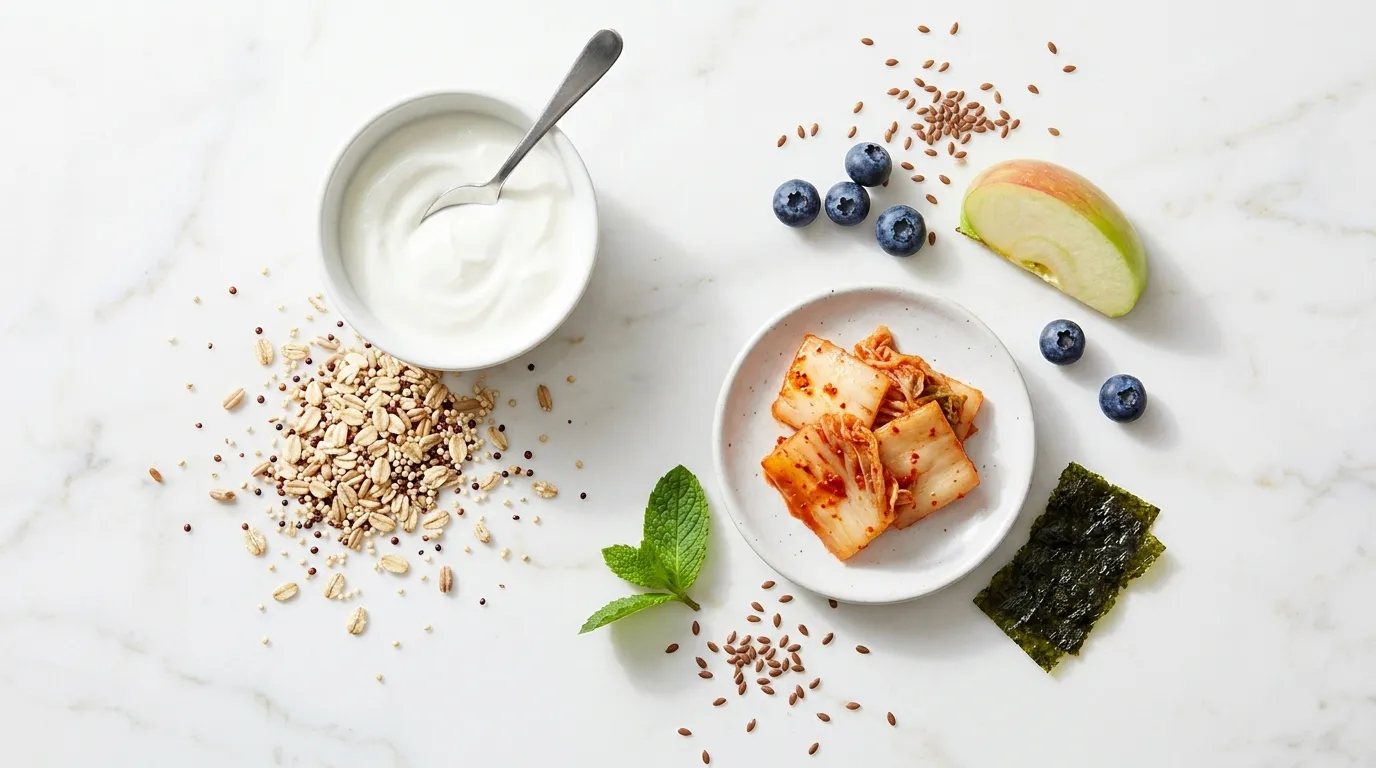
Fermented foods These are the most direct way to add beneficial bacteria to your gut. Fermented foods contain live microorganisms that survive digestion and populate your microbiome.

The best options include:

  • Plain yogurt with live active cultures (check the label — not all yogurts qualify)
  • Kefir — a fermented milk drink that contains a wider variety of bacterial strains than yogurt
  • Sauerkraut — fermented cabbage, rich in Lactobacillus bacteria
  • Kimchi — a Korean fermented vegetable dish with powerful probiotic properties
  • Miso — a fermented soybean paste used in Japanese cooking
  • Kombucha — a fermented tea (choose low-sugar varieties)

Even small, consistent amounts make a difference. You don’t need to eat all of these every day — even adding one or two regularly starts to shift your microbiome over time.

Prebiotic-rich foods Prebiotics are the fibers that feed your good bacteria. Think of probiotics as the seeds and prebiotics as the fertilizer. Without enough prebiotics, good bacteria struggle to survive and thrive.

Top prebiotic foods include:

  • Garlic
  • Onions and leeks
  • Asparagus
  • Bananas (especially slightly underripe ones)
  • Oats
  • Apples (with skin)
  • Flaxseeds
  • Jerusalem artichokes

High-fiber foods Dietary fiber is the single most important nutrient for gut health. It feeds your bacteria, keeps digestion moving, and reduces inflammation. Most Americans consume far less than the recommended 25–38 grams per day.

Great sources: beans and lentils, whole grains, vegetables, fruits, nuts, and seeds.

Polyphenol-rich foods Polyphenols are plant compounds that act as fuel for beneficial gut bacteria. Research from Harvard and other institutions consistently shows they improve microbiome diversity.

Best sources: blueberries, raspberries, dark chocolate (70%+ cacao), green tea, extra virgin olive oil, red grapes, and broccoli.

Cut back on these

  • Refined sugar and high-fructose corn syrup — feed harmful bacteria and promote inflammation
  • Artificial sweeteners — linked to gut microbiome disruption even in small amounts
  • Processed and fast food — high in additives that damage the gut lining
  • Excessive alcohol — reduces bacterial diversity and increases gut permeability
  • Red and processed meats in large quantities — associated with reduced microbiome diversity when consumed frequently

The goal isn’t perfection. It’s moving the balance in the right direction, consistently.


Probiotics, Prebiotics, and Digestive Enzymes: What’s Actually the Difference?

These three terms get used interchangeably — but they do completely different things. Understanding the difference helps you make smarter decisions, whether you’re adjusting your diet or considering supplementation.

Probiotics: The live bacteria themselves

Probiotics are live microorganisms — primarily bacteria — that, when consumed in adequate amounts, provide a health benefit to the host. That’s you.

When you eat yogurt, kimchi, or kefir, you’re consuming probiotics. When you take a probiotic supplement, you’re doing the same thing in a more concentrated, targeted form.

The key word is “live.” For probiotics to work, the bacteria need to survive the acidic environment of your stomach and reach your intestines. This is why quality matters — not all probiotic products contain what they claim.

Important probiotic strains to know:

  • Lactobacillus acidophilus — supports digestion and immune function
  • Bifidobacterium longum — helps reduce bloating and supports bowel regularity
  • Lactobacillus rhamnosus — one of the most researched strains for digestive and immune support

Prebiotics: The food that keeps probiotics alive

Prebiotics are specific types of dietary fiber that your body can’t digest — but your gut bacteria can. They pass through your small intestine undigested and reach the large intestine, where they become food for your beneficial microbes.

Here’s the important point: you can take all the probiotics in the world, but if you don’t feed them, they won’t survive. Prebiotics are what make probiotics effective.

Think of it this way: probiotics are the seeds, prebiotics are the soil and water.

Digestive enzymes: A completely different job

Digestive enzymes are not bacteria. They’re proteins produced by your pancreas, stomach, and small intestine that break food down into nutrients your body can absorb.

Enzymes break down:

  • Proteins → amino acids (protease)
  • Fats → fatty acids (lipase)
  • Carbohydrates → sugars (amylase)

When your digestive enzyme production is low — due to age, stress, poor diet, or certain health conditions — food doesn’t break down properly. This leads to bloating, gas, undigested food in the stool, and nutrient deficiencies even when eating well.

Synbiotics: When they work together

A supplement that combines both probiotics and prebiotics is called a synbiotic. This combination is more effective than either alone because the prebiotics feed the probiotic bacteria, helping them survive and colonize your gut. The most effective gut health supplements on the market today are synbiotic formulas that combine multiple probiotic strains with supporting prebiotics and digestive enzymes.


How Your Gut Health Directly Affects Your Weight

This is the section that surprises most people — and it’s one of the most important.

If you’ve ever felt like you were doing everything “right” — eating less, working out — and still not losing weight, this might explain why.

Your gut bacteria determine how many calories you extract from food

Two people can eat the exact same meal and absorb a different number of calories from it — based on the composition of their gut bacteria. Research from Washington University found that bacteria of the Firmicutes type (more common in people with obesity) are far more efficient at extracting calories from food than Bacteroidetes (more common in lean people).

This means your gut bacteria essentially influence whether food becomes energy or stored fat.

Gut bacteria control your hunger hormones

Your gut bacteria communicate with the hormones that regulate hunger and fullness:

  • Ghrelin is the hormone that makes you feel hungry. Certain gut bacteria promote higher ghrelin levels, which makes you feel hungry more often and more intensely.
  • Leptin is the hormone that signals fullness. Gut dysbiosis (imbalance) can create leptin resistance, which means your brain doesn’t receive the “I’m full” signal properly — so you keep eating past the point of satisfaction.

This is not willpower. It’s biochemistry — and it’s influenced by your microbiome.

Leaky gut drives inflammation that blocks fat loss

One of the most consequential gut health concepts is intestinal permeability — commonly called “leaky gut.” This is when the lining of your intestine becomes compromised, allowing bacteria, undigested food particles, and toxins to seep into the bloodstream.

Your immune system responds to these invaders with inflammation. And chronic, low-grade inflammation is one of the primary mechanisms that blocks fat loss and promotes metabolic dysfunction. It’s associated with insulin resistance, increased fat storage (especially around the belly), and difficulty building lean muscle.

Healing the gut lining reduces inflammation, which removes one of the biggest hidden barriers to weight loss.

The research is clear

A 2023 review published in Cell Host & Microbe confirmed that microbiome composition is a reliable predictor of metabolic health and body composition — independent of diet and exercise. Scientists are now seriously exploring microbiome-based interventions as a treatment for obesity.

This is why so many people find that fixing their gut health is the missing piece — the thing that finally makes their diet and exercise efforts actually pay off.


7 Science-Backed Ways to Improve Your Gut Health Starting Today

Now for the practical part. You don’t need to overhaul your entire life overnight. Small, consistent changes to your daily habits can shift your microbiome in as little as a few weeks.

1. Aim for 30 different plants per week

This one comes from a landmark study called the American Gut Project, which analyzed over 10,000 people’s microbiomes. The participants with the most diverse gut bacteria had one thing in common: they ate at least 30 different plant foods per week.

That sounds like a lot, but it adds up quickly. Every fruit, vegetable, grain, legume, nut, seed, and herb counts. One smoothie with spinach, banana, blueberries, and flaxseed is already 4 plants. A salad with 8 different vegetables is 8 more.

Diversity in plants = diversity in gut bacteria = better overall health.

2. Add a fermented food to one meal each day

You don’t need to eat five different fermented foods at once. Start with one. A small bowl of plain yogurt with breakfast. A spoonful of sauerkraut with dinner. A small glass of kefir as a snack.

Consistency over quantity. Doing this daily for 4–6 weeks has been shown in multiple studies to meaningfully increase gut microbial diversity.

3. Dramatically reduce ultra-processed food

This doesn’t mean you can never eat chips or fast food again. But if processed food is making up a large portion of your diet, your microbiome is paying for it daily.

The most practical approach: cook one more meal at home per day than you currently do. Every home-cooked meal with real ingredients is a step toward a healthier gut.

4. Get serious about stress management

Not just “try to stress less” — that’s not helpful advice. What actually works is building a consistent daily practice that activates your parasympathetic nervous system (the rest-and-digest response).

What the research supports:

  • 10–15 minutes of daily meditation or breathwork (apps like Calm or Insight Timer make this easy)
  • Daily walks of 20+ minutes, especially in natural environments
  • Limiting news and social media consumption, especially in the morning and before bed

Your gut responds to your stress levels within hours. Managing stress is one of the fastest-acting gut health interventions available.

5. Protect your sleep like it’s medicine

Aim for 7–9 hours per night, and keep your sleep and wake times consistent — even on weekends. Your gut microbiome operates on a 24-hour rhythm. Disrupting that rhythm disrupts your bacteria.

Two practical sleep habits that directly support gut health:

  • Stop eating at least 2–3 hours before bed (gives your digestive system time to rest)
  • Keep your bedroom cool and dark — better sleep quality, healthier gut

6. Move your body every day — even a little

You don’t need a gym membership or intense workouts. Studies show that even regular 30-minute walks improve gut motility, increase microbial diversity, and reduce inflammation. Movement is medicine for your digestive system.

If you currently live a sedentary lifestyle, simply standing up and moving for 5 minutes every hour is a meaningful start.

7. Consider a high-quality gut health supplement

Sometimes diet and lifestyle changes alone aren’t enough — especially if your gut health has been compromised for years, you’ve taken multiple rounds of antibiotics, or you’re dealing with chronic digestive symptoms.

A well-formulated gut health supplement can provide what diet alone sometimes can’t: a concentrated dose of multiple probiotic strains, prebiotic fibers, and digestive enzymes in clinically supported amounts.

When evaluating a supplement, look for:

  • Multiple probiotic strains (not just one) — a diverse formula supports broader microbiome recovery
  • Prebiotics included — they keep the probiotic bacteria alive and effective
  • Digestive enzymes — to help break down food more completely, especially if you experience bloating or discomfort after meals
  • Transparent ingredient labeling — you should know exactly what’s in it and how much
  • No unnecessary fillers, artificial colors, or preservatives

One supplement that checks all these boxes is GutOptim — a comprehensive digestive support formula that combines 10 carefully selected, easily absorbable ingredients to support a healthy gut lining, microbial balance, and smooth digestion. It’s one of the most complete options currently available for anyone serious about restoring their digestive health.


Your Gut and Your Immune System: The Connection Most People Miss

Here’s something worth stopping on: approximately 70% of your immune system lives in your gut.

It’s called GALT — gut-associated lymphoid tissue — and it’s a massive network of immune cells that lines your gastrointestinal tract. Your gut bacteria interact with these immune cells constantly, essentially training them on what to attack (pathogens) and what to tolerate (food, healthy tissue).

When your microbiome is healthy and diverse, your immune system is calibrated properly. When your gut is in dysbiosis, that calibration breaks down.

The consequences include:

  • Chronic inflammation — the root cause of most modern disease, from heart disease to diabetes to autoimmune conditions
  • Increased susceptibility to infections — your immune cells are less effective at fighting pathogens
  • Allergies and food sensitivities — your immune system starts reacting to things it shouldn’t
  • Autoimmune conditions — where the immune system begins attacking healthy tissue

The research linking gut health to conditions like Type 2 diabetes, rheumatoid arthritis, multiple sclerosis, and even certain cancers is growing every year. Scientists now understand that for many chronic diseases, the gut is where the story begins.

The practical takeaway is simple: taking care of your gut is one of the most powerful things you can do for your long-term immune health.


Frequently Asked Questions About Gut Health

How long does it take to improve gut health?

It depends on how disrupted your microbiome currently is, and what changes you make. Most people notice improvements in bloating, energy, and digestion within 2–4 weeks of consistent dietary changes. More significant shifts in microbial diversity typically take 1–3 months. For people recovering from long-term antibiotic use or chronic digestive conditions, meaningful recovery can take 3–6 months or longer.

Can stress really damage my gut?

Yes — and the research on this is very clear. Chronic psychological stress alters gut bacteria composition, increases intestinal permeability (leaky gut), slows digestion, and promotes inflammation. The gut-brain axis means your emotional state and your digestive health are in constant communication.

What is leaky gut syndrome?

Leaky gut (intestinal hyperpermeability) occurs when the tight junctions of your intestinal lining become loose or damaged, allowing bacteria, toxins, and undigested food particles to pass into the bloodstream. This triggers a widespread immune response and chronic inflammation. It’s associated with food sensitivities, fatigue, skin issues, bloating, and a wide range of systemic health problems.

Are probiotics worth taking every day?

For most people — yes. Especially if your diet isn’t consistently rich in fermented foods, if you’ve taken antibiotics in the past year, or if you experience ongoing digestive symptoms. The key is choosing a product with multiple, well-researched strains, adequate colony-forming units (CFUs), and prebiotic support.

What is the fastest way to reset your gut?

The most effective short-term reset combines: eliminating processed foods and sugar, significantly increasing plant diversity, adding a daily fermented food, staying well hydrated, prioritizing sleep, and reducing stress. Adding a quality probiotic supplement accelerates the process. Most people see noticeable results within 2–3 weeks of being consistent.

Can poor gut health cause weight gain?

Yes — through multiple mechanisms. Gut dysbiosis affects hunger hormones, increases calorie extraction from food, promotes chronic inflammation that disrupts metabolism, and has been directly linked to increased fat storage. This is one of the reasons some people struggle to lose weight despite dieting — the gut microbiome is working against them.

What does a gut-healthy daily routine look like?

It doesn’t have to be complicated. Start your morning with water before coffee. Include at least one prebiotic food and one fermented food somewhere in your meals. Choose whole foods over processed ones as your default. Move your body. Manage stress daily — even 10 minutes counts. Get consistent sleep. Those five habits alone will move the needle significantly.


The Bottom Line

Your gut is one of the most powerful systems in your body — and one of the most underestimated.

When it’s working well, you feel the difference everywhere: better energy, clearer thinking, easier weight management, stronger immunity, and more stable moods. When it’s struggling, those same areas feel like an uphill battle.

The encouraging reality is that your gut microbiome is one of the most responsive systems in your body. Unlike genetics, you can change it. The foods you eat this week will shift your microbial balance measurably within days. Lifestyle changes compound over weeks and months into real, lasting improvements.

You don’t have to overhaul everything at once. Pick one thing from this guide — add a fermented food, cut the sugary drinks, start a 20-minute walk — and build from there.

Ready to go deeper?


This article is for informational purposes only and does not constitute medical advice. Always consult with a qualified healthcare provider before starting any new supplement or making significant changes to your diet.

Sources: American Gastroenterological Association | Ipsos/MDVIP National Survey | NIH National Library of Medicine | Harvard T.H. Chan School of Public Health | Cell Host & Microbe (2023) | Frontiers in Medicine (2025)