

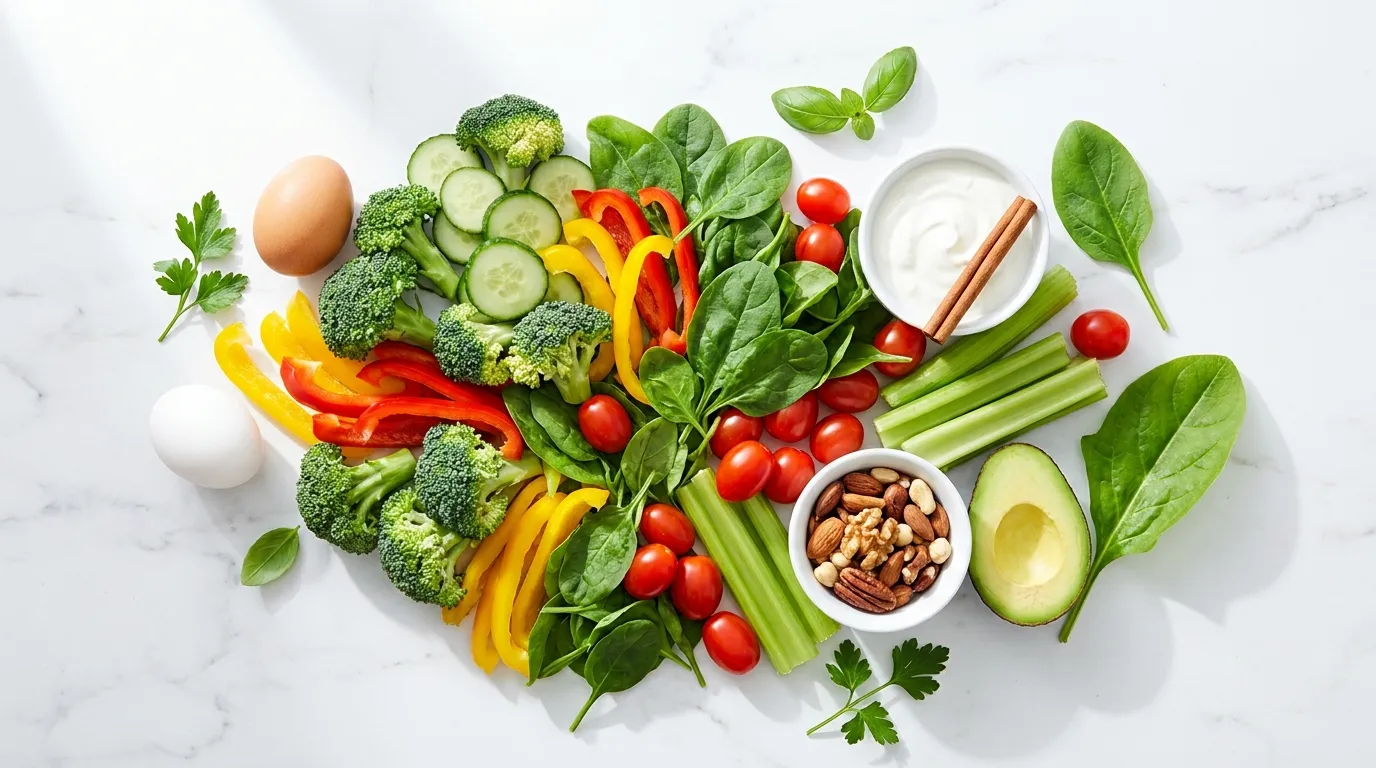
By Laura Collins | Updated July 2026 | 9 min read
This content is for informational purposes only and is not medical advice. Always consult your doctor or a registered dietitian about your specific dietary needs.
One of the most exhausting parts of managing blood sugar is feeling like you have to measure and second-guess everything you eat.
The good news: there’s a whole category of foods where you genuinely don’t need to stress about portions or blood sugar impact. These foods have minimal carbohydrates, significant fiber, and almost zero glycemic impact — meaning they won’t meaningfully raise your blood sugar no matter how much you eat.
The American Diabetes Association is direct about this: “Eat the most of these: whole, unprocessed, non-starchy vegetables. Non-starchy vegetables like lettuce, cucumbers, broccoli, tomatoes, and green beans have a lot of fiber and very little carbohydrate, which results in a smaller impact on your blood glucose.”
This article covers what you can eat freely, what needs portion awareness, and one important caveat that most “eat unlimited” articles miss.
The Honest Caveat First
Before the list — one thing most articles in this category don’t say clearly enough:
“Eat freely” means no blood sugar concern — not no calorie concern.
Nuts, cheese, and avocado are all blood-sugar-friendly foods. They’re also calorie-dense. For people managing weight alongside blood sugar — which is most people with Type 2 diabetes — eating unlimited quantities of calorie-dense foods can contribute to weight gain that makes blood sugar harder to manage long-term.
The foods in the “truly free” category below are both blood-sugar-neutral AND low in calories. The foods in the “eat generously but not infinitely” section are blood-sugar-friendly but calorie-dense.
Category 1 — Truly Free Foods
These foods have so few carbohydrates and calories that they have essentially zero blood sugar impact. The American Diabetes Association and most major diabetes organizations recommend building meals around these.
Non-Starchy Vegetables
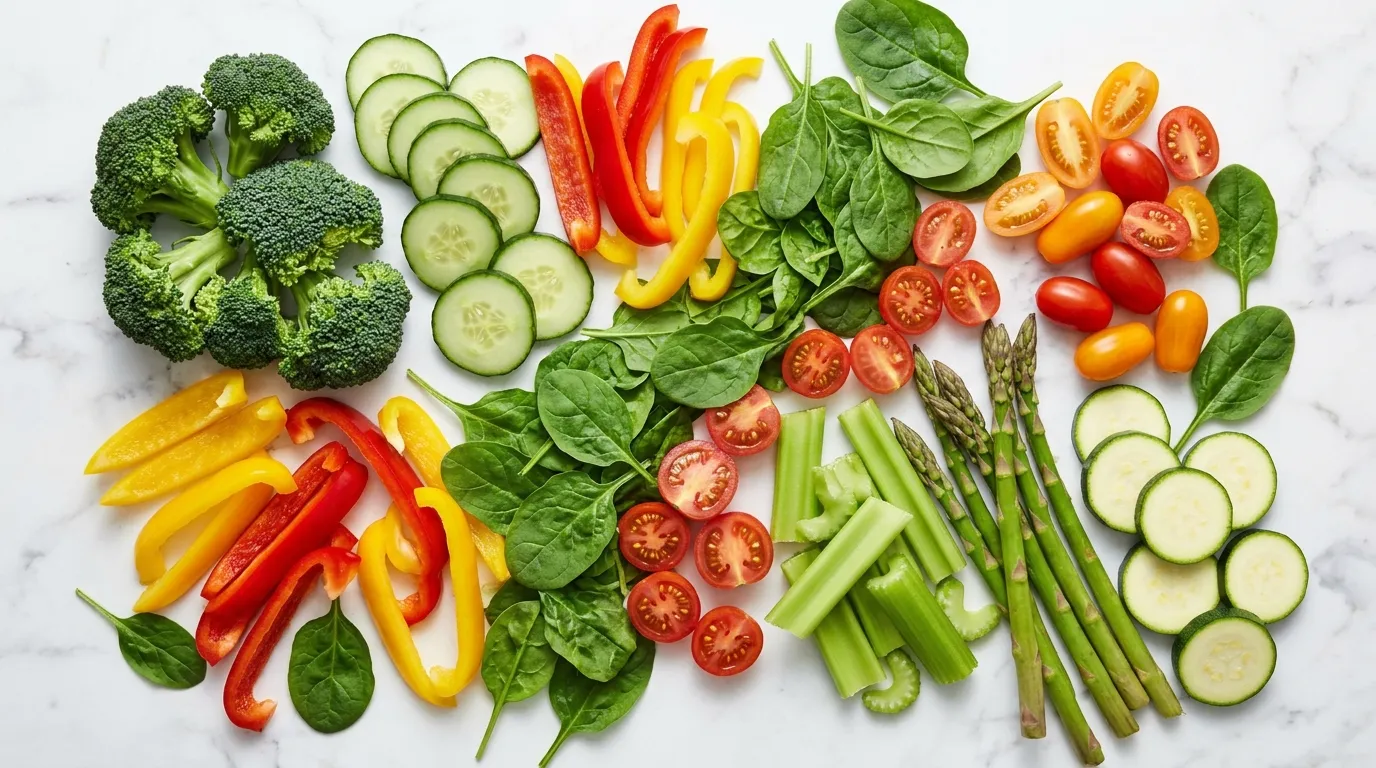
This is the foundation of blood-sugar-friendly eating — and the category where “unlimited” is genuinely accurate.
The full list of non-starchy vegetables you can eat freely:
Leafy greens: Spinach, kale, arugula, romaine lettuce, Swiss chard, collard greens, cabbage, bok choy
Cruciferous vegetables: Broccoli, cauliflower, Brussels sprouts, cabbage
Other non-starchy vegetables: Cucumbers, celery, zucchini, green beans, asparagus, mushrooms, bell peppers, tomatoes, onions, garlic, radishes, eggplant, artichokes, fennel, leeks
Why these are truly free: A cup of spinach has about 1 gram of carbohydrates. A cup of broccoli has about 6 grams — with 2.5 grams of fiber, meaning only 3.5 grams of net carbs. Compare that to a cup of white rice at 45 grams of carbohydrates. The math is simple: you’d have to eat enormous quantities of non-starchy vegetables to produce any meaningful blood sugar rise.
The fiber in these vegetables also actively slows glucose absorption from other foods eaten at the same meal — making them not just neutral but actively helpful.
Practical tip: The ADA recommends filling half your plate with non-starchy vegetables at every meal. This isn’t a restriction — it’s a strategy that automatically reduces the blood sugar impact of the rest of the meal.
Herbs and Spices
Fresh and dried herbs — basil, cilantro, parsley, mint, oregano, thyme, rosemary — have essentially zero carbohydrates and zero blood sugar impact. Use them freely to add flavor without any blood sugar concern.
Cinnamon specifically has published evidence for reducing fasting blood sugar — adding it liberally to food is one of the simplest blood-sugar-friendly habits you can build.
→ 7 Superfoods Diabetics Should Eat Every Week
Plain Water, Sparkling Water, and Unsweetened Tea
Zero carbohydrates, zero blood sugar impact. These are the only truly unlimited drinks for blood sugar management.
Unsweetened green tea, black tea, and herbal teas are blood-sugar-neutral and some — particularly green tea — have additional evidence for improving insulin sensitivity with consistent consumption.
Black coffee (no sugar, no flavored syrups) is also blood-sugar-neutral in moderate amounts — the caffeine can slightly affect insulin sensitivity, but for most people this effect is minor.
Eggs
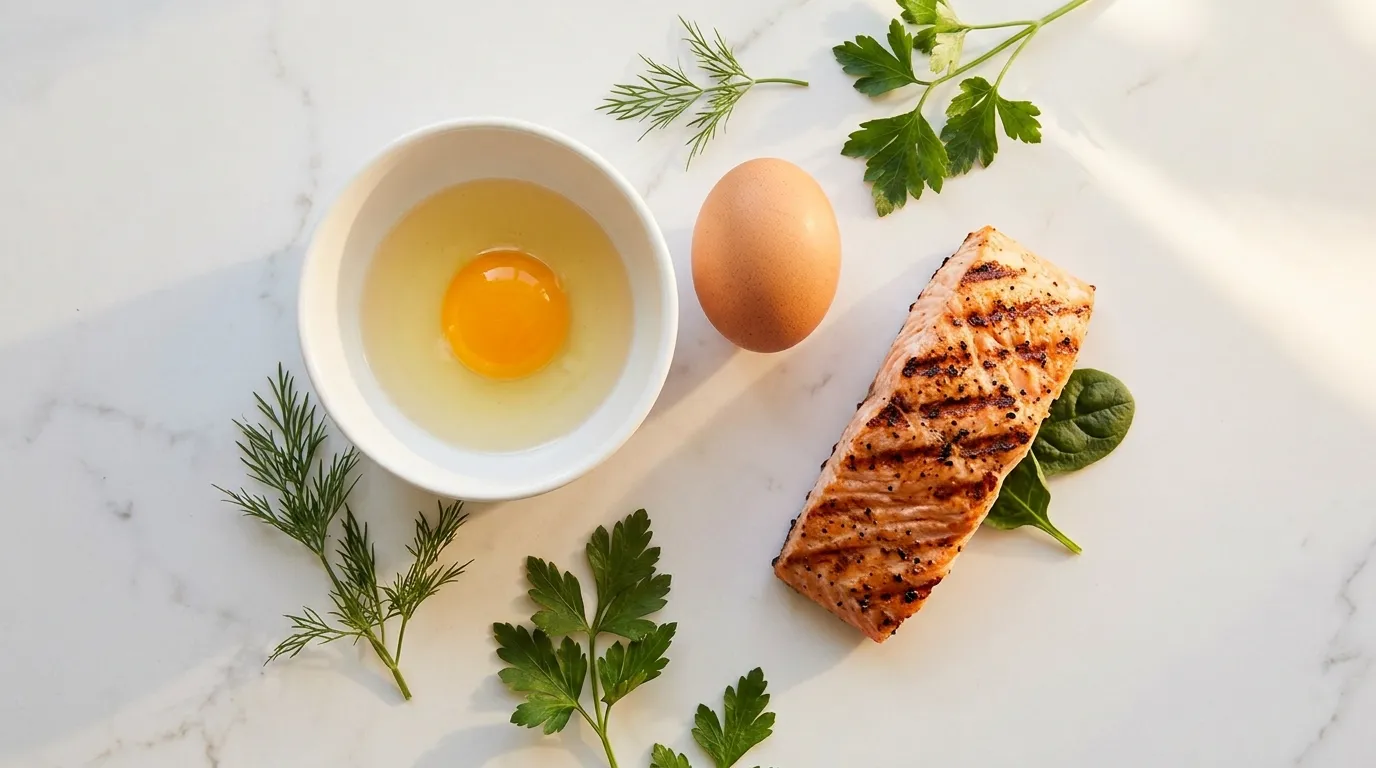
Eggs contain zero carbohydrates and have no blood sugar impact. A two-egg breakfast is one of the most consistently blood-sugar-stable meal choices available — high protein, zero carbs, significant fat that slows digestion.
You can eat eggs daily without blood sugar concern. The broader health conversation about eggs and cholesterol has evolved significantly — current evidence does not support limiting eggs for most healthy adults.
Plain Greek Yogurt — With a Caveat
Plain, unsweetened Greek yogurt has minimal carbohydrates (approximately 6 to 8 grams per serving from naturally occurring lactose) and significant protein that makes the carbohydrate impact even smaller. It’s not technically “unlimited” but it’s about as close as a dairy product gets.
The caveat: flavored yogurt is completely different. The “plain” qualifier is non-negotiable.
Category 2 — Eat Generously, Not Infinitely
These foods are genuinely blood-sugar-friendly and should be a major part of your diet — but they’re calorie-dense enough that portion awareness still makes sense.
Nuts and Nut Butters
Walnuts, almonds, pecans, macadamia nuts — all have minimal impact on blood sugar due to their combination of protein, fat, and fiber. A small handful has almost zero glycemic impact and actively reduces post-meal blood sugar spikes when eaten with other foods.
The honest limit: A one-ounce serving (about 23 almonds or 14 walnut halves) is approximately 160 to 190 calories. Eating three or four handfuls adds significant calories without additional blood sugar benefit. Blood-sugar-friendly — yes. Calorie-free — no.
Avocado
Half an avocado has approximately 4 grams of net carbohydrates and significant monounsaturated fat that actively slows gastric emptying. Blood-sugar-neutral and actively helpful for reducing meal spikes.
Same honest limit as nuts — avocados are calorie-dense. Half an avocado is approximately 120 calories. Genuinely free from a blood sugar perspective; not unlimited from a calorie perspective.
Cheese
Hard cheeses — cheddar, parmesan, gouda, brie — have essentially zero carbohydrates and minimal blood sugar impact. Cheese is one of the most blood-sugar-neutral foods available and a genuinely useful tool for adding flavor and satiety to meals without raising blood sugar.
Portion awareness applies for the same calorie-density reason as nuts and avocado.
Olive Oil and Healthy Fats
Pure fats — olive oil, coconut oil, butter — have zero carbohydrates and zero blood sugar impact. They actually help blood sugar by slowing gastric emptying when eaten with carbohydrate-containing foods.
Liberally using olive oil on vegetables, adding it to salads, or cooking with it is an actively blood-sugar-helpful practice.
Fish and Seafood
All plain fish and seafood — salmon, tuna, sardines, shrimp, cod, tilapia — have zero carbohydrates and no blood sugar impact. Protein from fish and seafood is one of the most blood-sugar-neutral calorie sources available.
Grilled, baked, or pan-seared fish with no breading or sugary sauces is genuinely a free food for blood sugar purposes.
Chicken and Turkey (Plain)
Plain, unbreaded chicken and turkey breast have zero carbohydrates. Like fish, they’re blood-sugar-neutral protein sources that can be eaten in generous quantities without blood sugar concern.
The caveats: breading adds carbs, and many sauces and marinades contain significant sugar. Plain is the operative word.
Category 3 — Common “Free Food” Mistakes
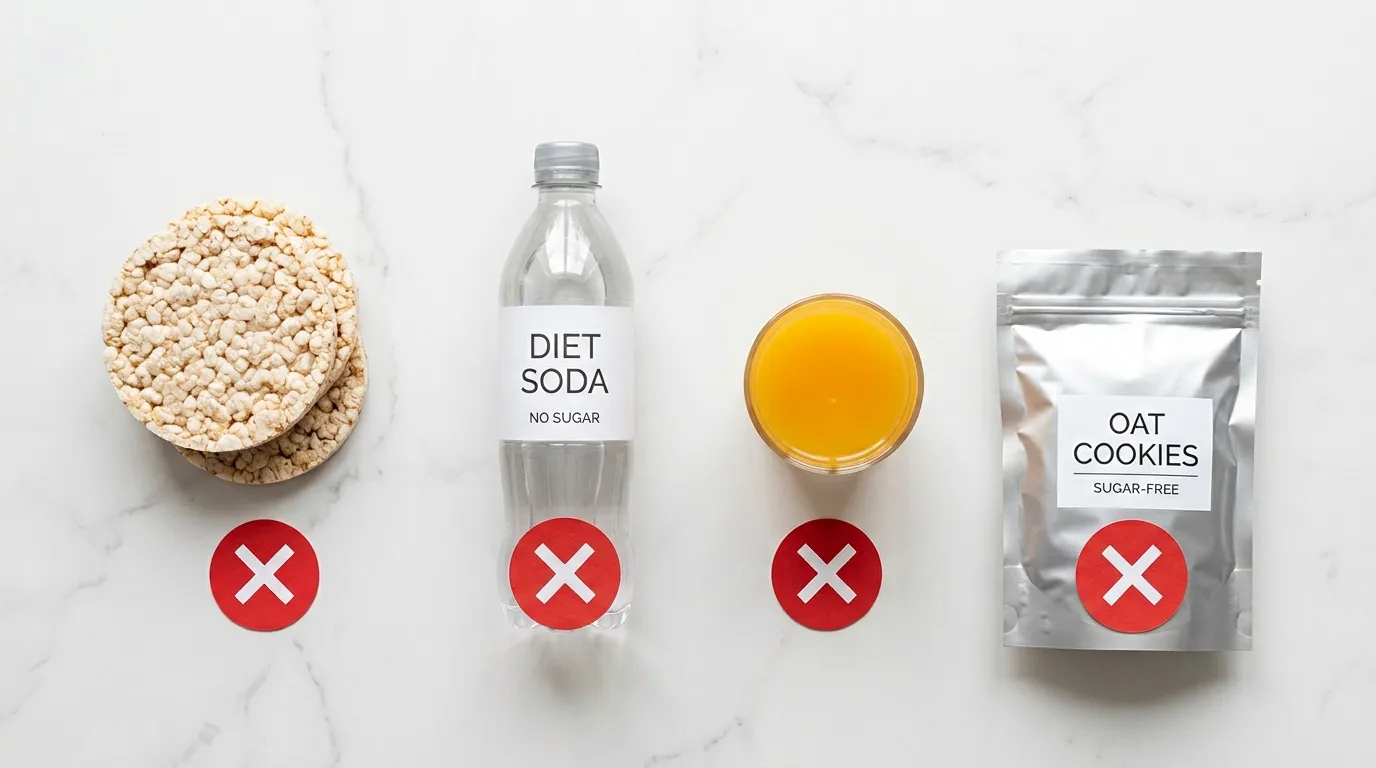
These foods are often listed as “eat freely” but have real blood sugar impact that’s worth knowing:
“Sugar-free” processed foods Sugar-free cookies, candy, and snacks often replace sugar with refined starch — which raises blood sugar almost as much as sugar does. “Sugar-free” on the label doesn’t mean blood-sugar-neutral. Always check the total carbohydrate count, not just the sugar line.
Diet soda Zero sugar, zero calories — but artificial sweeteners have been linked in some studies to altered insulin response and gut microbiome changes that affect glucose metabolism. Sparkling water is a better choice.
Rice cakes Often marketed as a light, healthy snack — but rice cakes have a glycemic index of approximately 82, higher than white bread. They’re low in calories but not blood-sugar-neutral.
Fruit juice labeled “no added sugar” We’ve covered this elsewhere — but worth repeating. 100% natural juice removes the fiber and concentrates the sugar. Not a free food for blood sugar.
Starchy vegetables Corn, potatoes, sweet potatoes, peas, and winter squash are nutritious but not blood-sugar-neutral. They’re very different from non-starchy vegetables and need to be treated as carbohydrate servings in your meal planning.
How to Build Meals Around Free Foods
The most practical application of this information is the Diabetes Plate Method — recommended by the ADA:
½ plate → Non-starchy vegetables (truly free)
¼ plate → Lean protein (fish, chicken, eggs, tofu)
¼ plate → Quality carbohydrates (beans, whole grains,
           fruit — the portion-aware category)
This structure automatically puts the free foods at the center of every meal — reducing blood sugar impact without requiring calorie counting or complex calculations.
Adding healthy fat (olive oil, avocado, nuts) to the meal further slows glucose absorption from the carbohydrate quarter of the plate.
Quick Reference — Free Foods vs. Portion-Aware Foods
| Truly Free | Eat Generously | Watch Portions |
|---|---|---|
| Non-starchy vegetables | Nuts and nut butters | Fruit |
| Eggs | Avocado | Beans and legumes |
| Plain water and tea | Cheese | Whole grains |
| Herbs and spices | Olive oil and healthy fats | Starchy vegetables |
| Plain black coffee | Fish and seafood | Plain Greek yogurt |
| Chicken and turkey (plain) |
Frequently Asked Questions
Can diabetics eat as many vegetables as they want? For non-starchy vegetables — yes. Spinach, broccoli, cucumbers, peppers, zucchini, and similar vegetables have minimal carbohydrate content and won’t meaningfully raise blood sugar regardless of quantity. Starchy vegetables (corn, potatoes, sweet potatoes) are different and need portion management.
Are eggs free for diabetics? Yes — eggs contain zero carbohydrates and have no blood sugar impact. They’re one of the most blood-sugar-stable breakfast options available and can be eaten daily without concern for glucose levels.
Can diabetics eat cheese freely? From a blood sugar perspective, yes — hard cheeses have essentially zero carbohydrates. From a calorie perspective, portion awareness still applies. A reasonable amount of cheese daily is both blood-sugar-friendly and nutritionally sound.
Is diet soda a free drink for diabetics? Not ideally. While diet soda has zero sugar and zero blood sugar impact in the immediate term, some research suggests artificial sweeteners may affect insulin response and gut microbiome health over time. Sparkling water or unsweetened tea is a better long-term choice.
Why are rice cakes not a free food? Despite being low in calories, rice cakes have a very high glycemic index (approximately 82) — meaning they raise blood sugar quickly despite their light, airy texture. They’re one of the most common “healthy snack” mistakes for people managing blood sugar.
Read More in This Series
→ Which Foods Spike Blood Sugar Most?
→ 5 “Healthy” Foods That Actually Spike Blood Sugar
→ 7 Superfoods Diabetics Should Eat Every Week
→ Best Fruits for Diabetes
→ Best Bedtime Snacks for Diabetics
→ Best Bedtime Drinks to Lower Blood Sugar
→ How to Lower Blood Sugar Naturally
This article is for informational and educational purposes only. It does not constitute medical advice. Always consult a licensed healthcare professional for personalized dietary guidance.